Home/Solutions/VFD & motor starting
Motors & drivesStop motor starts from tripping your supply.
A motor started direct-on-line can draw several times its running current for a few seconds. That surge trips generators, dips voltage across the site, sets your monthly demand peak and decides how large any converter must be. Controlled starts change all four.
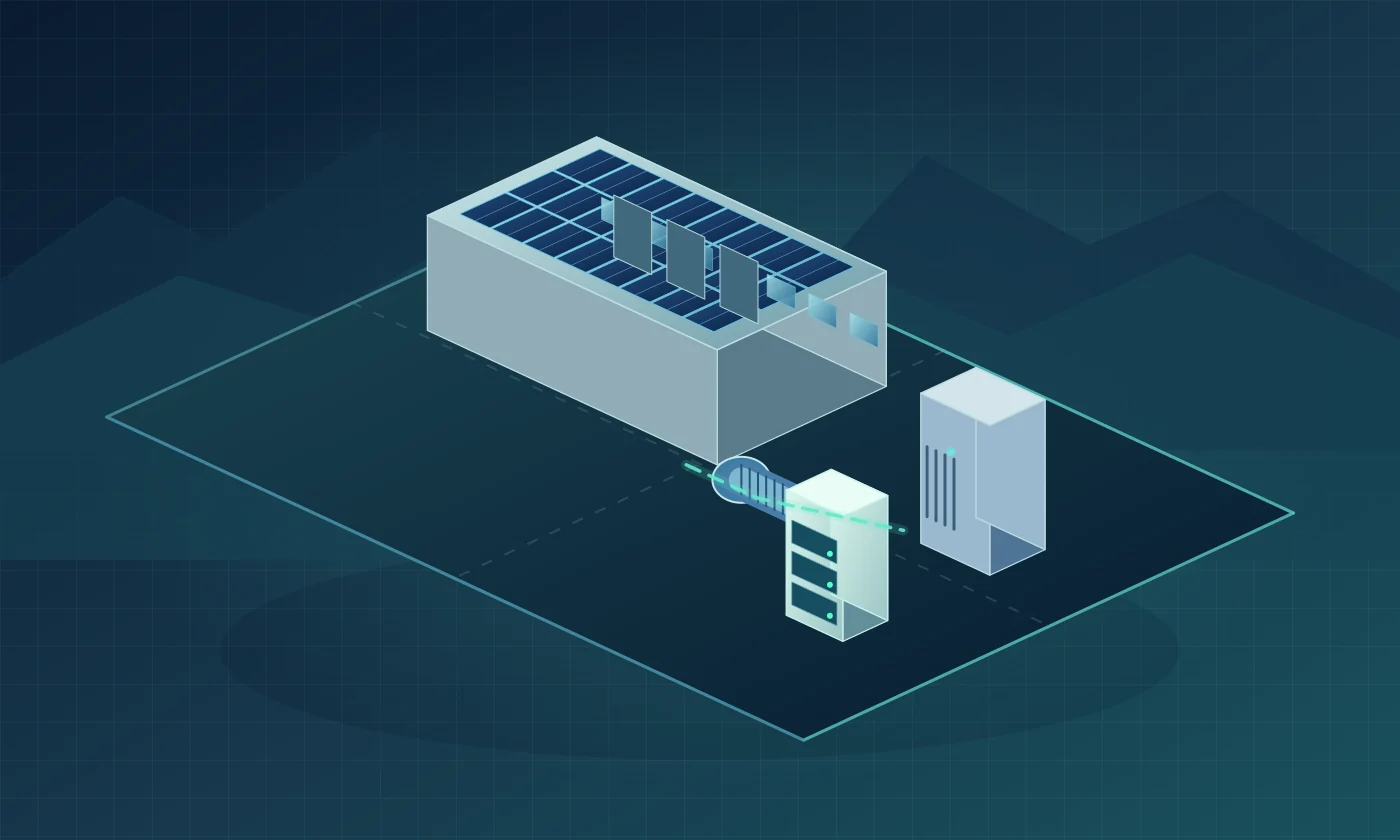
Start the same motors two ways.
In the motor-start scenario, compare the site today (direct-on-line) with VFD-controlled starting: watch the surge, the shaking supply and the ramp.
Motor-driven production facility → drives and start sequencing first
Where it hurts today
- Pumps and compressors start direct-on-line several times a shift; each start dips the supply voltage.
- Simultaneous restarts after a stoppage set the month’s maximum demand.
- Pumps throttle flow with valves while the motor runs at full speed.
What changes
- Drives ramp frequency so current stays close to running current.
- Starts are sequenced so only one large motor accelerates at a time.
- Where the process allows, speed follows demand instead of throttling.
Impact, classed honestly
- Starting current and demand peak · Calculable
- Energy saving from speed control · Estimate until measured
- Harmonics and motor insulation · Needs site verification
- Whether storage adds value later · Needs site verification
Interactive comparison loads with JavaScript. Qualitative behaviour only: no ratings, savings or backup times are shown.
One engineering state. Drag the comparison or step through the four stages. The plant view, the single-line diagram and the graphs below follow the same configuration rules as the Energy Explorer. Motion and wording show behaviour only; no ratings, sizes or savings are implied.
01How it operates
- The VFD rectifies mains AC to a DC bus.
- Capacitors smooth the DC bus.
- An IGBT inverter synthesises variable frequency and voltage for the motor.
- Frequency ramps from near zero, so starting current stays close to running current.
02When it makes sense
- Direct-on-line starts that set the month’s demand peak or dip the voltage.
- Pumps and fans that run at partial flow for long hours.
- Conveyors and crushers that need controlled acceleration and sequencing.
- Sites adding PCS or DG capacity that would otherwise be sized for start surges.
03Engineering constraints
- Drives create harmonics; filters or multi-pulse designs may be required.
- Motor insulation, cable length and bearing currents need checking.
- High-inertia loads (crushers, flywheels) need appropriate torque and braking.
- Bypass arrangements must not reintroduce direct-on-line surges unexpectedly.
Starting current by method.
Typical shapes for the same motor started four ways. Your motors’ actual starting behaviour is measured or taken from nameplate and process data.
A direct-on-line start draws a surge of several times running current until the motor is up to speed; star-delta lowers it with a second step at changeover; a soft starter limits it by ramping voltage; a VFD ramps frequency so current stays close to running current. Shapes are typical, not a measurement of any motor.
Inside the drive that replaces the surge.
Working mechanism, where it connects in the single-line diagram, its operating profile, and what limits and protects it. All equipment
Variable-frequency drive (VFD)
Rectifier, DC bus and inverter synthesise a variable-frequency supply so a motor ramps up instead of surging.
Lower starting current ≠ energy saving. A VFD start limits the surge and the demand peak it sets. Energy falls only where the process can run at lower speed, which is measured, never assumed.
- Adds harmonics that may need filtering
- Starting torque must suit high-inertia loads such as a loaded jaw crusher
- Cable length and motor insulation limits
When starting is harder than running.
The generator copes with the running load but not with the crusher or pump starting.
Voltage dips during starts disturb the rest of the site.
A few simultaneous starts set the maximum demand you pay for all month.
Belts, couplings and gearboxes take the shock of every hard start.
Converters sized for running load cannot absorb uncontrolled starts.
Long lines and low fault levels make starting dips worse.
Ramp, sequence, then size the energy system.
- 01Measure the starts
Motor list, starting method, duty cycle and the process order of every motor group.
- 02Control the surge
VFDs or soft starters where they pay off; better sequencing everywhere else.
- 03Coordinate with the EMS
Starts are released in order, so the combined surge stays inside grid, PCS and DG limits.
- 04Size solar, battery and PCS
Against measured running load plus controlled starts, not the nameplate total.
The reference comparison above explains starting behaviour. Use your own motor list and starting method to explore the site-specific pathway.
Explore your crusher and motor loads.
Confirm starting methods, running demand and source limits. The plant, electrical connections and equipment explanations use the same answers.
Find My Energy SolutionThe link suggests a motor-control objective; it does not assume direct-on-line starts, a generator or an energy saving.
DOL, star-delta, soft starter or VFD?
Qualitative comparison. The right choice depends on the motor, the load it drives and how often it starts.
| Consideration | Direct-on-line | Star-delta | Soft starter | VFD |
|---|---|---|---|---|
| Starting surge | Highest | Reduced, with a transition spike | Reduced and adjustable | Lowest, fully controlled |
| Speed control while running | No | No | No | Yes |
| Energy benefit on pumps and fans | None | None | None | Possible with variable flow |
| Harmonics | None | None | Low, during start | Reviewed; filters where needed |
| Fit with PCS / DG supply | Often the limiting case | Better, check transition | Good with sequencing | Best for weak or islanded supply |
A stone-crusher motor sequence.
Our process page shows an illustrative crusher model comparing direct-on-line starts with VFD starts and sequencing. It is an engineering study, not an installed project.
See the crusher study- Motor list with kW ratings
- Present starting method
- Start frequency and duty cycle
- Process sequence
- Generator rating
- Transformer / feeder details
- Existing drives and filters
- Single-line diagram
Motors and drives, answered.
Do I need a VFD on every motor?
No. Large motors with frequent starts, variable-flow pumps and fans, and motors that must run on a generator or battery are the usual candidates. Others can stay on their existing starters with better sequencing.
Can my crusher or pump run on solar and battery?
Often, once starts are controlled. The starting surge, not the running load, usually decides whether a converter or generator can carry a motor. With drives and sequencing, the energy system can be sized for running load plus controlled starts.
Do VFDs cause harmonics?
They can. Harmonic distortion is reviewed during design, and filters or drive types are selected where needed so the site stays within acceptable limits and protection works correctly.
See how this would work at your plant.
Answer a few visual questions and see your site today and with Samvora: at midday, in the evening peak and in a power cut. No sign-up; nothing is sent until you choose.
Start with how your site actually uses energy.
Share a few details and your recent bills. A Samvora engineer reviews your load, tariff and reliability needs before anything is proposed.