Home/Industries/Warehouses & logistics
Warehouses · logistics parks · distribution centresA large roof, a modest load, and a lot of decisions in between.
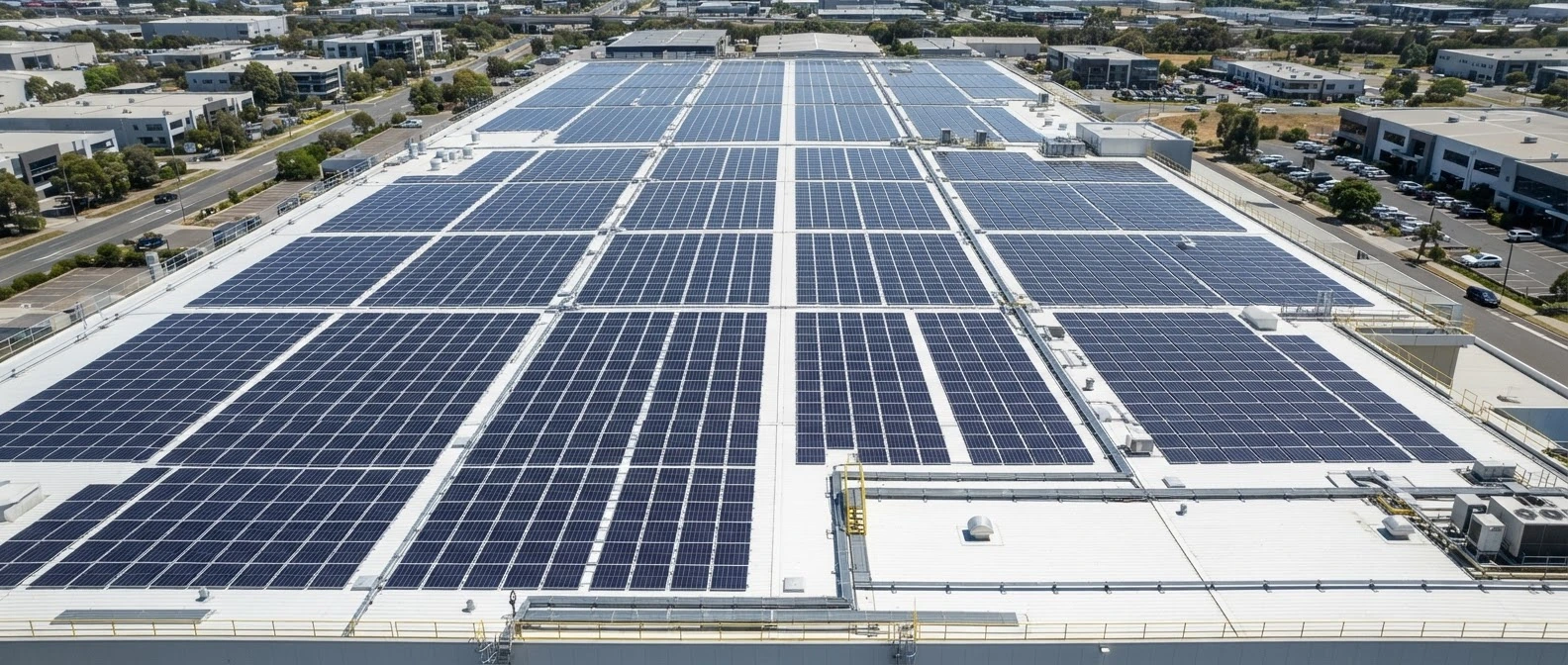
Warehouse roofs can generate far more than the building uses in the day. Samvora sizes solar, storage and charging around how the site actually operates, not around the roof area alone.
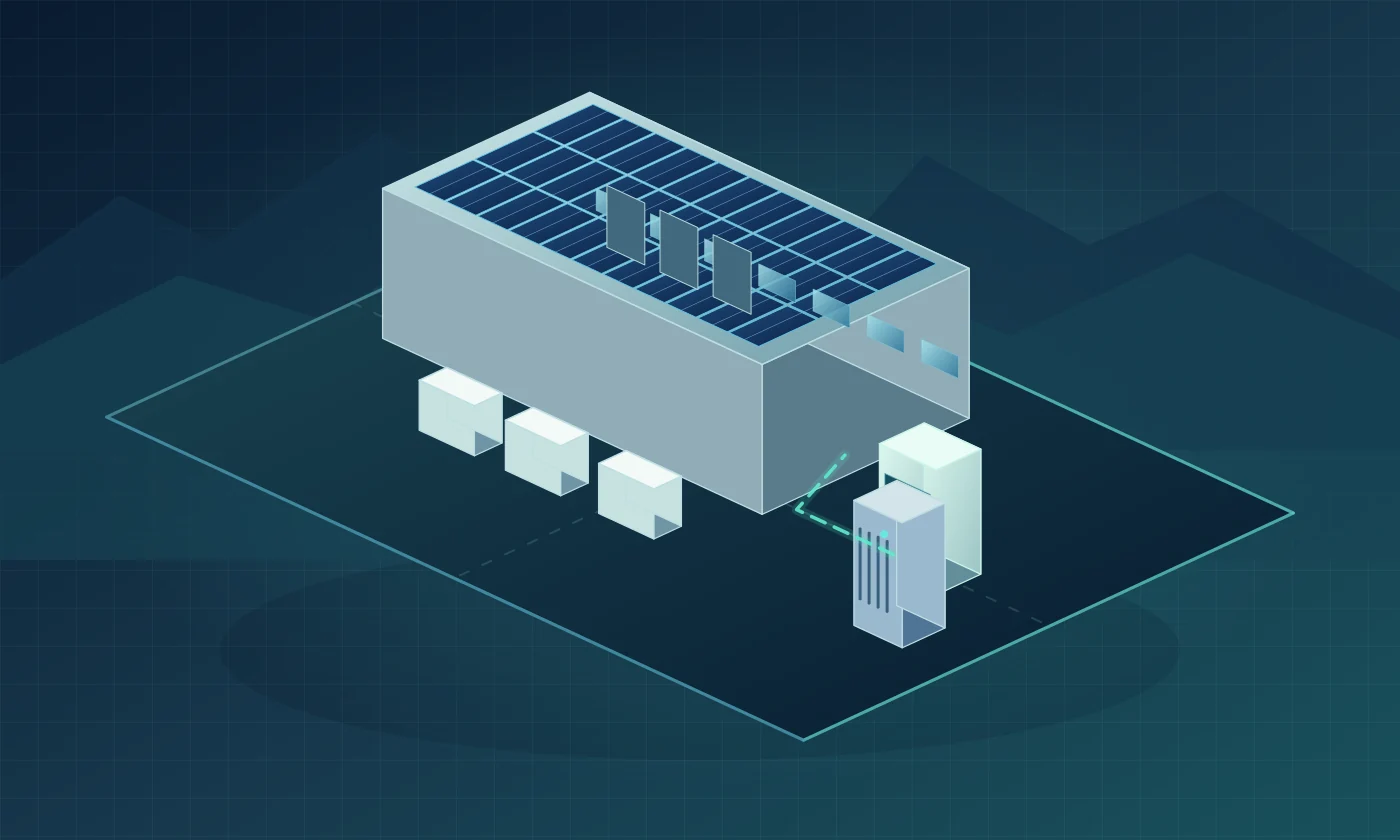
High-bay roof, docks, ventilation and charging.
Watch midday roof solar charge the battery and forklifts, then carry the evening dispatch shift. Switch to an interruption to see what stays on.
One engineering state. The plant view, the single-line diagram and the graphs below follow the same configuration rules as the Energy Explorer. Motion and wording show behaviour only; no ratings, sizes or savings are implied.
01How it operates
- A large roof generates through the working day.
- Forklift and EV charging is scheduled into solar hours.
- The battery covers late dispatch shifts and the evening peak.
- WMS, IT and security stay on the protected supply.
02When it makes sense
- Roofs much larger than daytime load.
- Electric forklifts or fleet charging.
- Evening dispatch shifts.
- Export limits that would waste midday solar.
03Engineering constraints
- Roof sheeting age and purlin strength decide PV feasibility.
- Charging schedules must fit operations, not the other way round.
- Fire-safety and sprinkler rules affect roof layouts.
- Lease terms decide who owns and benefits from the system.
Shift hours under a generating roof.
A warehouse’s load sits in shift hours under a roof that generates most at midday; charging and storage close the gap.
Solar output is zero at night, rises after sunrise, peaks near solar noon and falls to zero by sunset. Haze or cloud lowers the whole curve. Load continues after sunset, which is the gap storage fills.
Supply always equals demand: solar first, then the battery in the windows the EMS chooses, then the grid. Charging appears below the axis. Shape from the illustrative model; real balance comes from metered data and the engineering model.
Low load per square metre, high roof potential.
The roof is the asset; the load decides how much of it to use.
Scheduled into solar hours.
Follow temperature and shift.
Must not stop.
High-bay LED on shift schedules.
Sheeting age and purlins decide feasibility.
Shift hours, with a quiet night.
Receiving, put-away and charging.
Picking and loading run into the peak window.
Security, IT and lighting only.
Warehouse: Lighting, docks and charging during shift hours; a large roof with modest load.
More roof than load, at the wrong hours.
Midday surplus with nowhere to go.
Shift load lands in the peak window.
Fleets charging at peak hours.
Solar sized to use, storage for the evening.
Roof solar sized to what the site can use or store, a battery for evening shifts, and an EMS that schedules charging into solar hours.
Status labels are honest: Core service is delivered today; Engineering capability is designed and delivered project by project; Study / roadmap is under evaluation.
- 01Large-roof solar EPC Core service
Structure, sheeting and fire-safety review.
- 02Storage for evening shifts Engineering capability
Battery sized on measured evening energy.
- 03Charging schedules via EMS Engineering capability
Forklift and EV charging in solar hours.
- 04Fleet-charging expansion Study / roadmap
Planned with the operator’s roadmap.
Midday surplus becomes the evening shift.
Roof solar meets the day; surplus charges the battery and the fleet; the battery carries dispatch through the peak window.
Illustrative behaviour, not project data.
Without storage, the grid supplies everything solar does not, including the whole evening peak. With storage, midday surplus is kept and the EMS holds grid import down in the peak window. No export is assumed.
For a warehouse we start with…
- 12 months of bills + TOD split
- Shift pattern and dispatch hours
- Charging fleet and plans
- Roof drawings and sheeting age
- Lease terms (who owns the roof)
See how this would work at your warehouse.
Answer a few visual questions and see your site today and with Samvora: at midday, in the evening peak and in a power cut. No sign-up; nothing is sent until you choose.
Start with how your site actually uses energy.
Share a few details and your recent bills. A Samvora engineer reviews your load, tariff and reliability needs before anything is proposed.