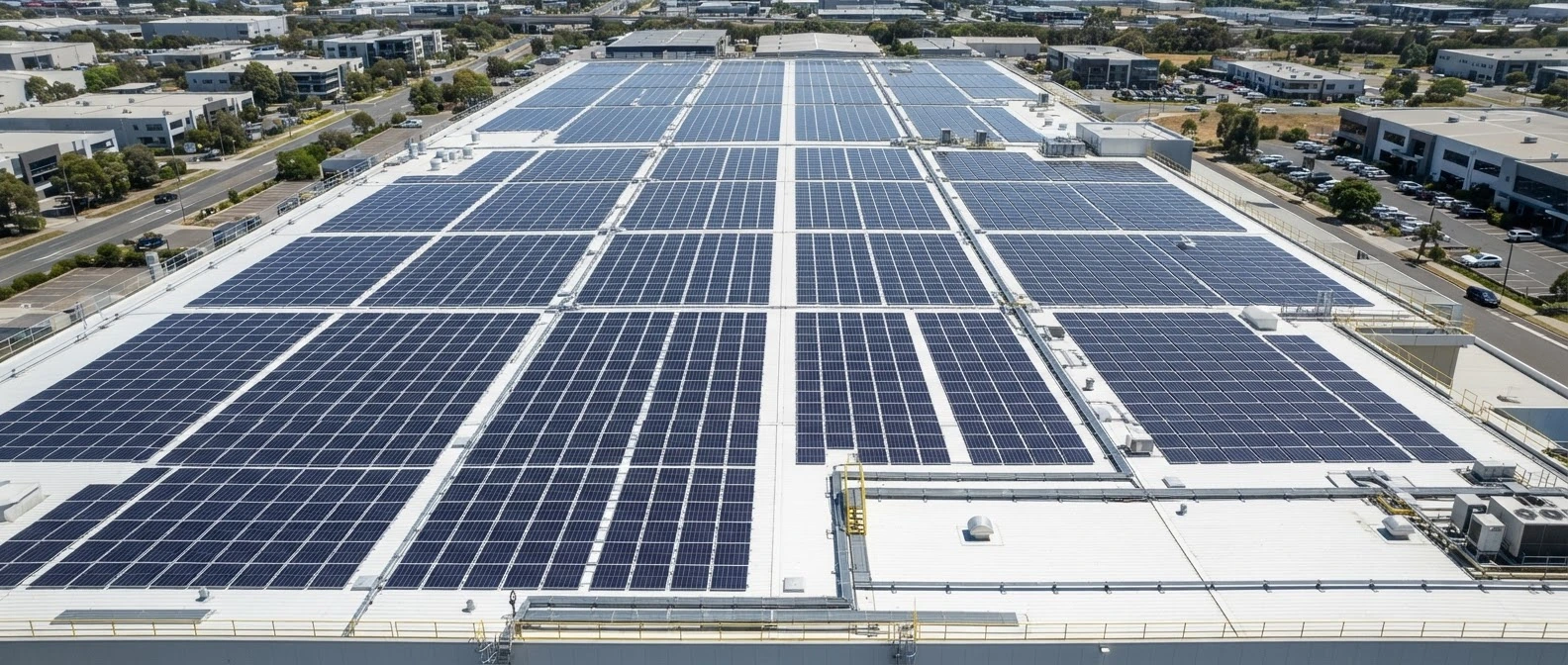
Home/Industries/Commercial Buildings
Malls · offices · showrooms · schoolsCoordinate rooftop solar, building demand and operating hours.
Commercial buildings run on HVAC, lighting, lifts and IT, with an afternoon demand hump and an evening tail. Samvora aligns solar and storage with how the building actually runs.
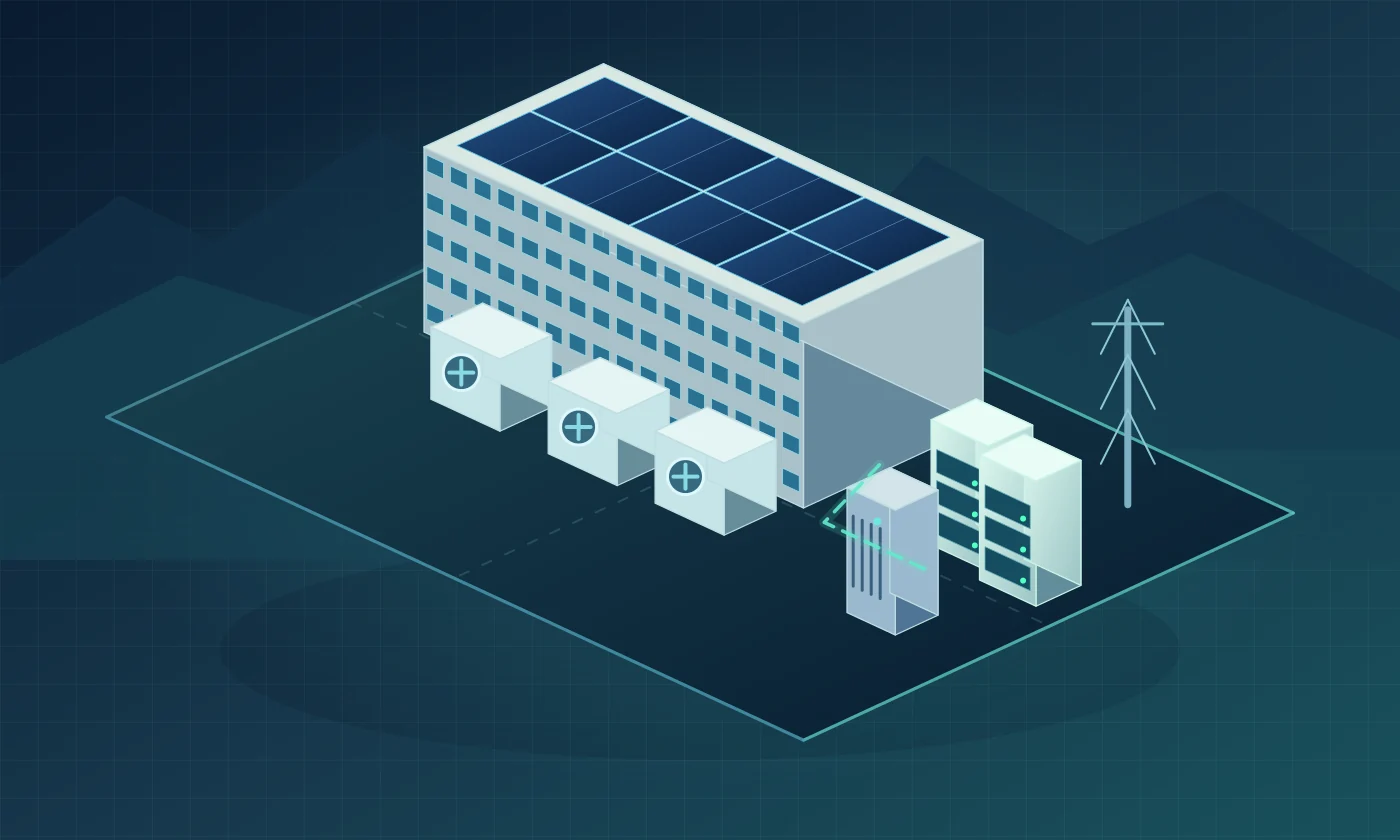
Chillers, escalators, tenants and carport solar.
Cooling dominates the afternoon and trading runs into the evening peak. Watch the battery take over as solar fades.
Mall → chiller-driven demand and TOD control
Where it hurts today
- Chillers dominate the afternoon and trading hours carry the load into the peak window.
- Tenant loads are uncontrolled; demand charges are set by chiller staging.
- Supply is reliable, so backup is not the priority: cost is.
What changes
- The EMS caps demand at the agreed limit using the battery first.
- Solar carries the afternoon cooling load; the battery carries the evening.
Impact, classed honestly
- Maximum-demand reduction · Calculable
- Bill reduction · Estimate until measured
- Chiller plant integration · Needs site verification
Interactive comparison loads with JavaScript. Qualitative behaviour only: no ratings, savings or backup times are shown.
One engineering state. Drag the comparison or step through the four stages. The plant view, the single-line diagram and the graphs below follow the same configuration rules as the Energy Explorer. Motion and wording show behaviour only; no ratings, sizes or savings are implied.
01How it operates
- Roof and carport solar cover part of the afternoon cooling load.
- The battery discharges through the evening tariff window as trading continues.
- Chillers can pre-cool in solar hours under EMS control.
- Life-safety and security loads stay on the protected bus.
02When it makes sense
- Large chiller plants and long trading hours.
- TOD tariffs with an evening peak.
- Car parks suitable for solar carports.
- Tenant metering that needs clear allocation.
03Engineering constraints
- Tenant sub-metering and billing arrangements must be respected.
- Chiller control integration needs the BMS vendor’s cooperation.
- HT connection and transformer capacity decide where storage connects.
- Carport structures need wind and vehicle-impact design.
Cooling-led load into the evening.
Roof and carport solar meet part of the afternoon cooling; storage and pre-cooling move the rest out of the peak window.
Supply always equals demand: solar first, then the battery in the windows the EMS chooses, then the grid. Charging appears below the axis. Shape from the illustrative model; real balance comes from metered data and the engineering model.
Grid energy drawn in each tariff window and the highest demand of the day, before and after storage. Bars are relative to the no-storage case; actual tariffs and savings depend on the utility category and are calculated only from your bills.
A building is a set of very different loads.
We map what must stay on, what can wait and what can move in time.
The largest and most weather-driven load.
Must remain available.
Servers, access control, CCTV.
Can be scheduled around peaks.
Where solar can be placed.
Daytime peak, evening tail.
HVAC and occupancy rise with the sun; solar covers much of it.
Cooling peaks; demand charges are set here.
Retail and mall footfall continue after solar fades.
Mall · day and evening: Cooling dominates the afternoon; trading hours carry load into the evening.
Demand charges and TOD windows.
Short HVAC spikes set the monthly demand charge.
Mall and retail hours overlap the peak window.
Tenants expect lifts, lighting and IT to stay on.
Solar sized to the building; storage only where it pays.
Rooftop and canopy PV carries the working day. A BESS under EMS control trims demand spikes and bridges into the evening when the bill history justifies it.
Status labels are honest: Core service is delivered today; Engineering capability is designed and delivered project by project; Study / roadmap is under evaluation.
- 01Rooftop & canopy solar EPC Core service
Layout, structure and yield around HVAC plant and access paths.
- 02BESS + EMS peak shaving Engineering capability
Battery discharges to hold demand under the contract limit.
- 03TOD shifting Engineering capability
Stored midday solar used in the evening peak window.
- 04Tenant / floor reporting Engineering capability
Monitoring split by meter where required.
Solar carries the day; storage trims the peak.
At midday the array covers HVAC and lighting. In the afternoon hump the EMS limits grid import; in the evening the battery supports the tariff peak.
Illustrative model, not project data. Topology, storage role and limits are set per site after assessment.
Without storage, the grid supplies everything solar does not, including the whole evening peak. With storage, midday surplus is kept and the EMS holds grid import down in the peak window. No export is assumed.
For a commercial building we start with…
- 12 months of bills with TOD split
- Contract demand
- HVAC schedule & plant list
- Roof / canopy drawings
- Tenant metering layout
See how this would work at your building.
Answer a few visual questions and see your site today and with Samvora: at midday, in the evening peak and in a power cut. No sign-up; nothing is sent until you choose.
Start with how your site actually uses energy.
Share a few details and your recent bills. A Samvora engineer reviews your load, tariff and reliability needs before anything is proposed.