Home/Solutions/Reduce diesel generator use
Diesel generator alternativeRun your diesel generator less, and only when it matters.
Many generators start for every short power cut and then run lightly loaded for hours. Solar, battery storage and a grid-forming converter can carry the site through most interruptions, so the generator becomes the last resort instead of the first response.
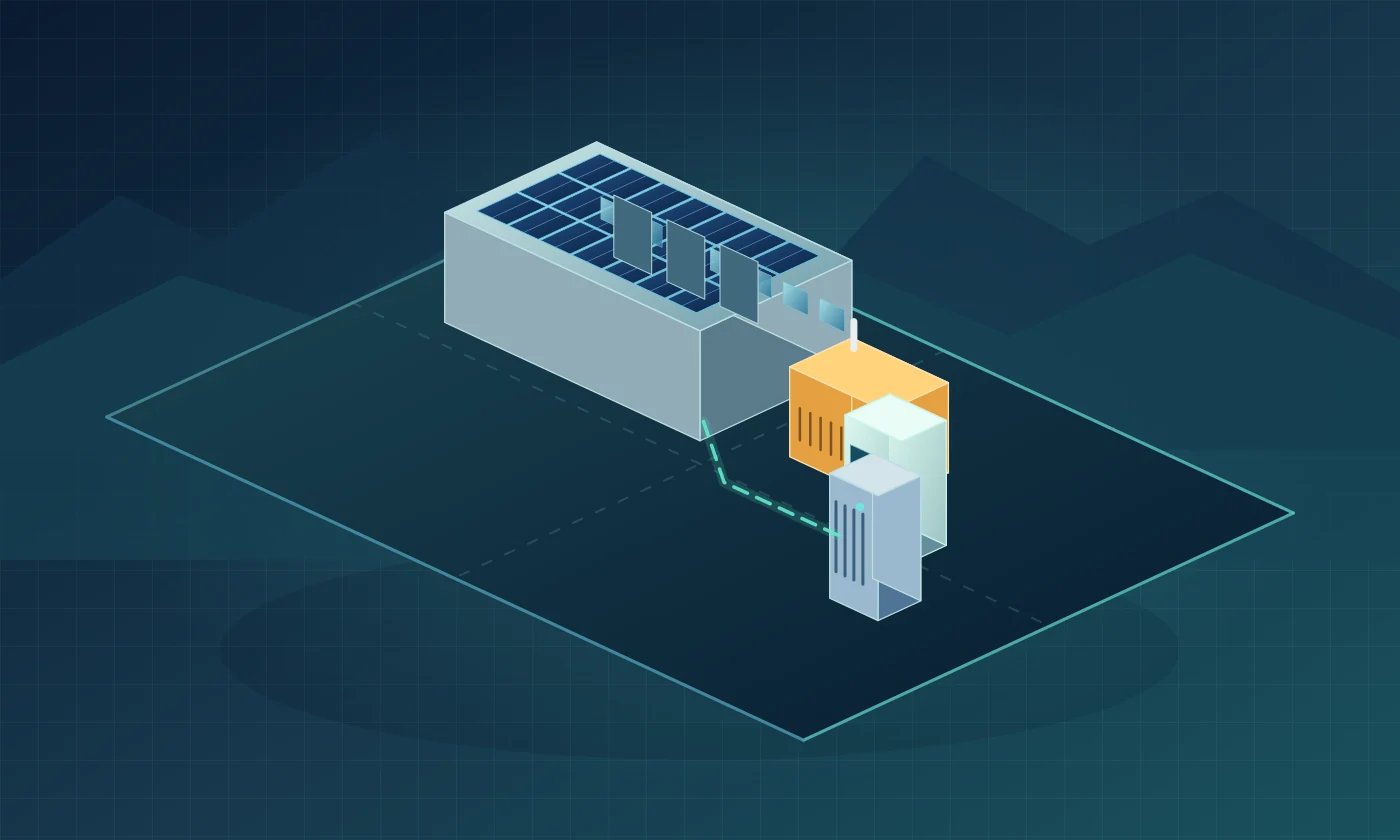
The generator moves from first response to last resort.
Switch between a short interruption and an extended outage. The battery carries short cuts; the DG starts only at the protected reserve, then runs loaded while it recharges the battery.
DG-dependent factory → BESS + PCS + EMS + DG coordination
Where it hurts today
- Daily cuts start the generator for every interruption, however short.
- The DG often runs lightly loaded through the evening, the least efficient way to burn fuel.
- Every changeover is a short blackout: process lines and cold rooms restart each time.
What changes
- Grid fails → the PCS carries critical feeders immediately; the DG stays on standby for short cuts.
- The DG starts only when the battery reaches its protected reserve, then runs at an efficient loading and recharges the battery.
- The EMS stops the generator as soon as the battery can carry the site again.
Impact, classed honestly
- Generator starts and run time · Calculable
- Fuel saving · Estimate until measured
- DG and PCS parallel operation · Needs site verification
- Seamless critical supply · Needs site verification
Interactive comparison loads with JavaScript. Qualitative behaviour only: no ratings, savings or backup times are shown.
One engineering state. Drag the comparison or step through the four stages. The plant view, the single-line diagram and the graphs below follow the same configuration rules as the Energy Explorer. Motion and wording show behaviour only; no ratings, sizes or savings are implied.
01How it operates
- Short interruptions ride on the battery through a grid-forming PCS: the DG does not start.
- Solar keeps generating during outages because the PCS provides the voltage reference.
- At the protected reserve the EMS starts the DG as a last resort.
- While running, the DG is loaded efficiently and recharges the battery so it can stop sooner.
02When it makes sense
- Frequent interruptions that start the DG many times a day.
- Generators that mostly run lightly loaded.
- Sites with fuel logistics, noise or emission constraints.
- Daytime loads that solar can carry.
03Engineering constraints
- DG and PCS parallel operation needs a reviewed synchronising or changeover scheme.
- Fuel and run-hour estimates come only from the generator log and measured load.
- The DG governor and AVR must accept the load steps the battery hands over.
- Battery reserve size sets how long the DG can stay off.
Fewer starts, better loading.
The pattern below is a day of three interruptions. Run hours and fuel figures are estimated only from your generator log and measured load.
Today every interruption starts the generator, often lightly loaded, where fuel use per unit of energy is worst. With storage, short interruptions ride on the battery and the generator starts only when an outage outlasts the reserve, then runs well loaded while recharging the battery. Fuel figures are estimated only from your generator log.
Generators are least efficient at light load: fuel per unit of energy rises steeply below roughly half load. A hybrid system lets the DG run less often and, when it runs, closer to its efficient loading. The curve is a qualitative shape; your generator’s own data decides real figures.
The generator, under EMS control.
Working mechanism, where it connects in the single-line diagram, its operating profile, and what limits and protects it. All equipment
Diesel generator (DG)
An engine-driven alternator, rated in kVA, that becomes the last-resort source once storage carries short outages.
DG kVA ≠ real power (kW). A generator is rated in kVA. The real power it delivers depends on the load power factor, and its step-load capability limits how much load it can pick up at once.
- Start-up delay before it can take load
- Step-load and transient limits
- Fuel logistics and maintenance by run hours
Signs the generator is doing too much.
Even interruptions of a few minutes mean a start, a changeover and a run-down.
Long hours at low loading waste fuel per unit and are hard on the engine.
Machines, computers and lifts stop during the seconds before the generator takes load.
Diesel purchases, logistics and service hours are a fixed monthly cost.
Guests, patients, residents or neighbours are affected every time it runs.
On weak or remote feeders, the generator runs most of the day. See industrial microgrids.
The battery answers first. The generator answers last.
- 01Short outage: no generator start
A grid-forming PCS keeps the site bus alive from the battery. Critical loads do not notice the changeover.
- 02Solar keeps working
Because the PCS provides the voltage reference, grid-tied solar continues to generate while the site is islanded.
- 03Long outage: generator as last resort
When the battery reaches its protected reserve, the EMS starts the generator and loads it efficiently, and spare capacity can recharge the battery.
- 04Every day: less grid and DG energy
Solar supplies daytime load; storage covers evening and peak windows.
Review the illustrative comparison above, or build a system from your own generator use, loads and backup objectives.
Explore a DG-reduction pathway.
Confirm your site, installed equipment and operating needs. Plant, SLD, equipment working, graphs and before/after share your answers.
Find My Energy SolutionThis link suggests a starting interest; it supplies no generator rating, solar capacity or measured demand.
Storage, conversion and control around your generator.
We keep the generator you have and change its role. The engineering is in the coordination: when it starts, how it is loaded and how it hands back.
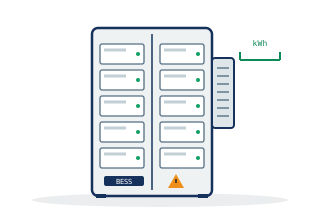
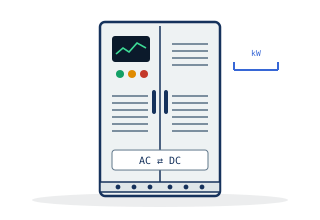
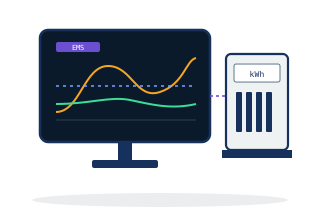
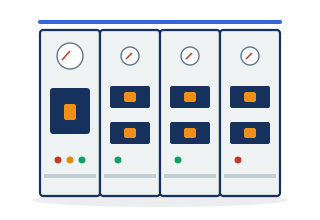
Illustrations show equipment types, not specific products or Samvora installations.
Design points we resolve on every DG-reduction project.
The technical path behind the plain-language promise.
| Topic | What we decide |
|---|---|
| DG integration | Break-before-make changeover, or synchronised operation with a grid-forming PCS. Chosen from the existing panel, generator controller and the load that must stay up. |
| Minimum loading | The EMS keeps the generator out of long light-load running, either by loading it with battery charging or by not starting it. |
| Reserve policy | A protected battery reserve, agreed with you, that triggers the generator start and protects critical loads. |
| Island operation | Grid-forming PCS rating against critical running load, motor starts and transformer inrush. Load-shedding tiers for non-critical feeders. |
| Protection | Fault levels in island mode differ from grid-connected operation; settings and earthing are reviewed for both. |
| Baseline | Run hours, fuel purchases and outage history recorded before the project, so any reduction is measured, not estimated. |
Bring what you have. We fill the gaps.
None of these is required to start a conversation. Each one makes the first assessment more precise.
- Generator rating (kVA) and age
- Run-hour or fuel log
- Outage history (frequency, duration)
- Critical loads to keep running
- 12 months of electricity bills
- Single-line diagram / LT panel photos
- Changeover or synchronising panel details
- Space for battery and PCS
Diesel generators and storage, answered.
Can a battery completely replace my diesel generator?
Sometimes, for sites with short outages and modest critical loads. For long outages the generator usually stays as a last-resort source. The design decides from your outage history, critical load and available space, and we tell you plainly which case you are in.
Will the generator and battery run together?
They can. Depending on the site, the generator either changes over to supply the site while the battery waits, or runs in parallel with a grid-forming PCS so it can carry load efficiently and recharge the battery. Each arrangement needs reviewed interlocks and protection.
How much diesel will I save?
We do not state a saving before measuring. We start from your generator run hours, fuel records and outage history, model the configuration, and report any reduction only from measured operation.
See how this would work at your site.
Answer a few visual questions and see your site today and with Samvora: at midday, in the evening peak and in a power cut. No sign-up; nothing is sent until you choose.
Start with how your site actually uses energy.
Share a few details and your recent bills. A Samvora engineer reviews your load, tariff and reliability needs before anything is proposed.