Home/Solutions/Hybrid / PCS + BESS
Power conversionPower conversion designed for controlled backup and islanded operation.
DC-coupled hybrid inverters and AC-coupled PCS blocks both give you energy control. We choose between them from your single-line diagram, scale and motor loads, and use grid-forming PCS where backup matters.
The converter decides what the site can do when the grid is gone.
Watch a workshop through a grid interruption. With a grid-forming PCS the critical feeders keep running on the battery; switch to “site today” to see the same moment without it.
One engineering state. The plant view, the single-line diagram and the graphs below follow the same configuration rules as the Energy Explorer. Motion and wording show behaviour only; no ratings, sizes or savings are implied.
01How it operates
- IGBT bridges convert battery DC to site AC and back; the same hardware charges and discharges.
- Grid-following: the PCS synchronises to the grid and injects or absorbs a set power.
- Grid-forming: the PCS creates voltage and frequency itself, so the site can run as an island.
- The EMS sends power setpoints; protection opens the incomer before islanding.
02When it makes sense
- Sites that need critical loads to keep running through interruptions.
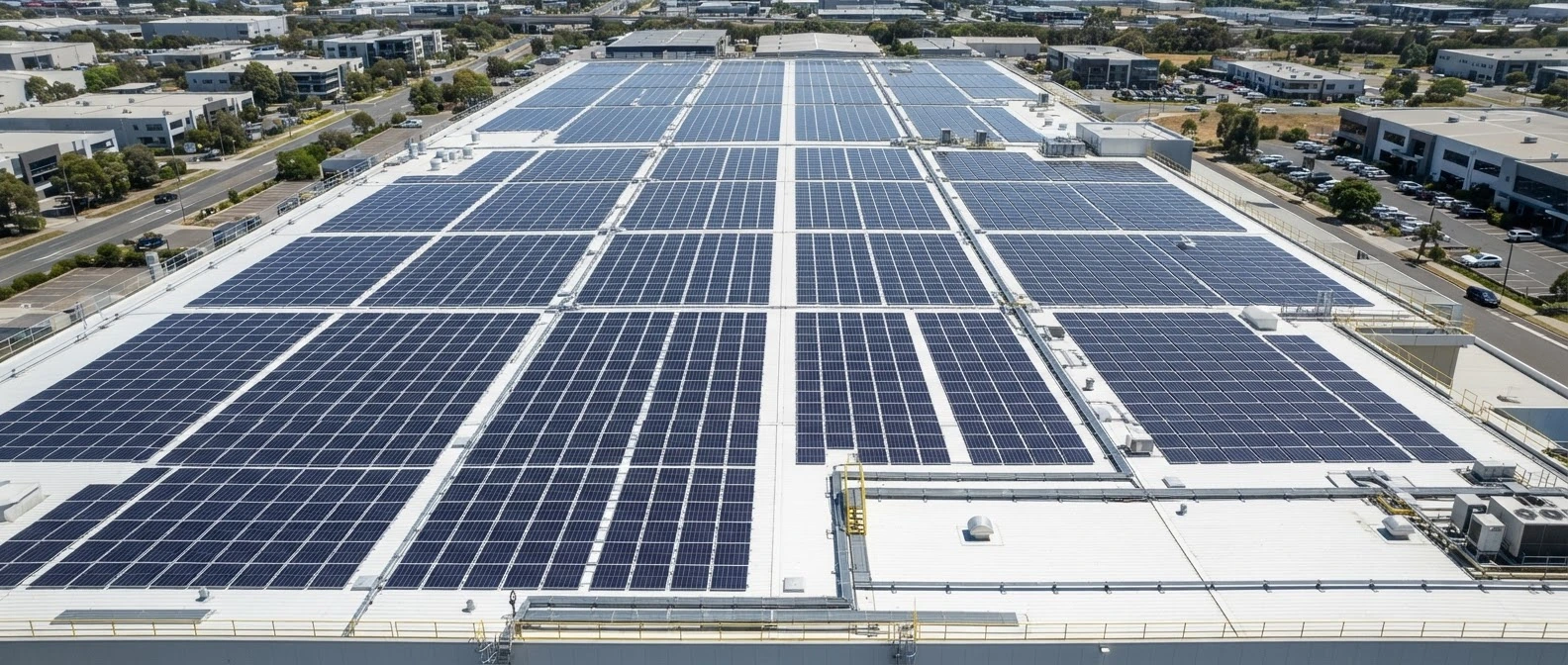
- Existing solar that must keep producing during an outage.
- Weak or frequently interrupted feeders.
- Microgrids where the battery, not the generator, should set the frequency.
03Engineering constraints
- Overload capability and fault current are finite: large motor starts must be checked.
- Grid-forming operation needs interlocked changeover and a protection review.
- Unbalanced single-phase loads need converter and transformer arrangements that can carry them.
- Export, islanding and anti-islanding rules depend on the utility connection.
Critical supply, reserve and converter limits.
Through an interruption, critical loads stay supplied while non-critical feeders can be paused to protect the reserve. Charge and discharge always stay inside the converter’s power limit.
When the grid fails, critical feeders stay on the grid-forming PCS while the EMS pauses non-critical feeders if the reserve needs protecting. When the grid returns, non-critical loads come back and the battery recharges.
Emergency Backup: Holds a deep reserve for critical loads. The battery discharges only when the grid fails. Useful ahead of known outages or monsoon storms. The battery stays inside its operating window; charge and discharge never exceed the converter limit.
Inside the converter that forms the grid.
Working mechanism, where it connects in the single-line diagram, its operating profile, and what limits and protects it. All equipment
Power conversion system (PCS)
A bidirectional converter between battery DC and site AC: grid-following for cost shifting, grid-forming to run the site as an island.
Grid-following vs grid-forming. Grid-following follows an existing voltage and injects current. Grid-forming creates voltage and frequency itself, so the site can keep running when the grid fails, where islanding is permitted and engineered.
- Power is capped by the converter rating and its short-term overload
- Limited fault current in island mode changes protection design
- Derating at high ambient temperature
AC-coupled PCS vs DC-coupled hybrid.
Select the coupling from physical evidence: transformer, conduit space, protection, motor loads and the utility’s interconnection rules.
| Consideration | DC-coupled hybrid inverter | AC-coupled PCS + BESS |
|---|---|---|
| Typical fit | New solar + storage built together; smaller to mid-size sites | Larger sites, retrofits to existing solar, higher power requirements |
| Energy path | PV and battery share a DC bus inside one converter | PV inverters and a separate PCS meet on the site AC bus |
| Scaling | Limited by the hybrid unit rating | Modular PCS and battery blocks scale independently |
| Motor starting & transients | Checked against hybrid overload limits | PCS overload capability sized against measured inrush |
| Existing solar | Usually needs redesign of the PV side | Keeps existing inverters; adds storage alongside |
| Backup / islanding | Model-dependent backup port or islanding | Grid-forming PCS for site-level island operation where specified |
Practical limits, protection settings and utility interconnection approval vary by selected equipment and site. Neither topology is universally better.
The difference between backup and continuity.
Grid-tied inverters follow the grid. When it fails they must stop, and your solar stops too. A grid-forming PCS creates the voltage and frequency reference itself, so the battery can carry the site bus and solar can keep generating while islanded.
Outage first, then changeover. Generator start delay, fuel cost, and grid-tied solar trips off.
Reserve protected in advance, site bus kept alive, critical loads prioritised, non-critical shed and restored in order.
When the grid goes down, the system decides.
An illustrative evening outage on a site with solar, BESS and a grid-forming PCS under EMS control.
Tell us what must keep running.
Critical-load demand, backup duration, existing inverter or DG, battery limits and islanding permissions determine whether an outage strategy is feasible.
Explore my backup needsIllustrative sequence. Actual transfer, reserve and supply capability need equipment evidence and site verification.
- BeforeNormal operation
Sources serve the site and storage may hold a reserve, where the available energy and limits allow.
- OutageGrid lost · assess island supply
With a permitted isolation arrangement and suitable grid-forming equipment, the BESS and compatible sources may supply the protected bus.
- ReserveEMS protects priority loads
Non-critical loads can be shed as reserve becomes constrained. Required duration depends on supplied demand and usable energy.
- RestoreGrid returns · controlled restoration
Approved synchronisation and protection govern reconnection, load restoration and subsequent charging.
We start with physical single-lines.
Before committing to AC or DC coupling, Samvora engineers review transformer parameters, physical space, protection relays, earthing, and the interconnection requirements of your utility.
- Single-line diagram
- Transformer rating
- LT panel & protection
- Motor list & starting method
- Critical-load circuits
- Existing inverters
- Earthing
- Utility interconnection rules
Power conversion, answered.
What does grid-forming mean?
A grid-following inverter needs the utility grid as its voltage and frequency reference, so it stops when the grid fails. A grid-forming PCS can create that reference itself, so a site can keep running and solar can keep generating while islanded.
Will my site be completely off-grid?
Not necessarily. Grid-minimised operation treats the grid as a managed resource: used when cheap or necessary, limited when not, and available for backup charging. The target is set with you.
How is this different from a UPS or a diesel generator?
A UPS protects a few loads for minutes. A generator starts after the outage and burns fuel. A PCS and BESS under EMS control can carry a large part of the site, keep solar running and decide which loads to keep or shed.
See how this would work at your site.
Answer a few visual questions and see your site today and with Samvora: at midday, in the evening peak and in a power cut. No sign-up; nothing is sent until you choose.
Start with how your site actually uses energy.
Share a few details and your recent bills. A Samvora engineer reviews your load, tariff and reliability needs before anything is proposed.