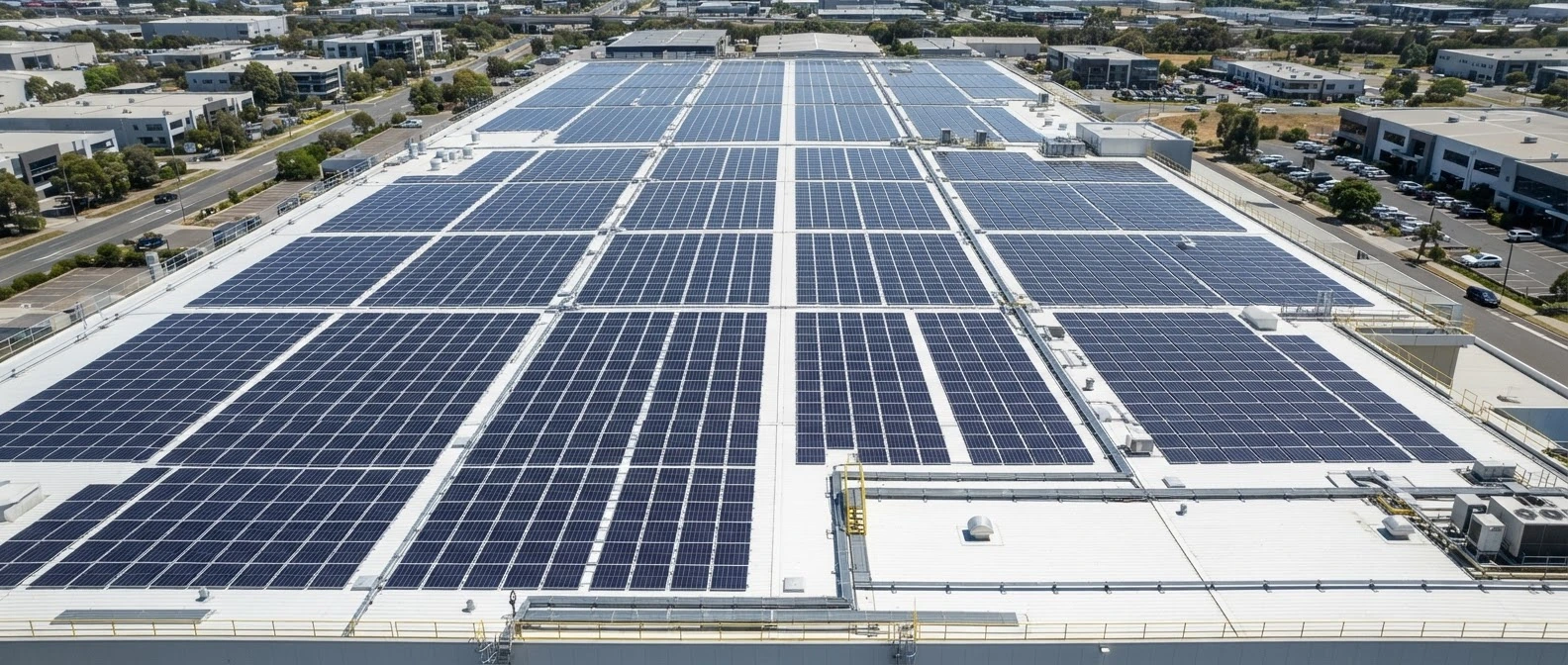
Home/Solutions/Existing Solar Upgrade
Existing Solar UpgradeBuild on the energy assets already installed.
If you already have rooftop solar but still face high bills, evening demand charges or no backup, you do not need to start again. We add storage and control to what is already working.
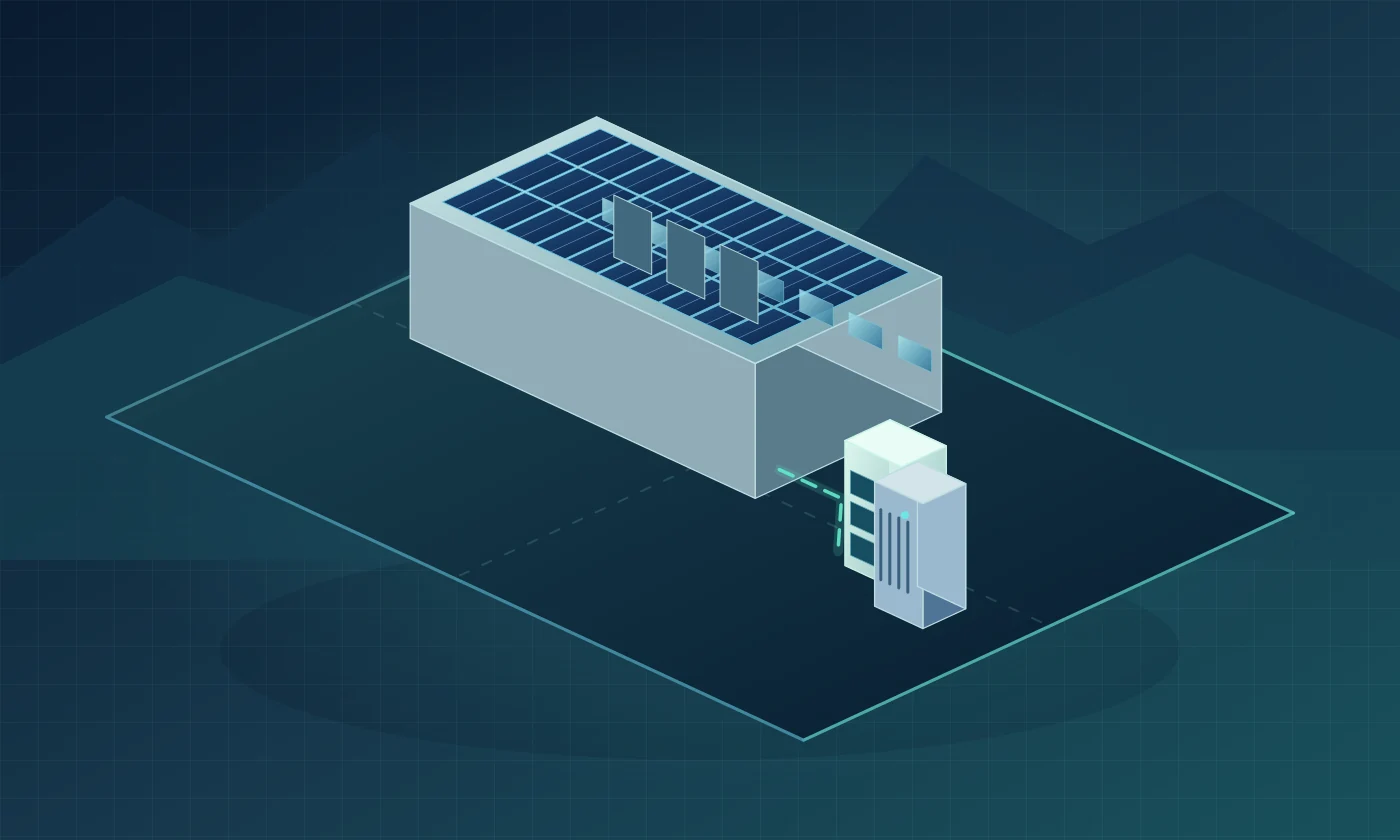
Keep your panels. Add the part that makes them useful in a power cut.
Compare the site today with the upgrade during a grid interruption: without a grid-forming source, existing inverters stop; with the new PCS, they keep producing for critical loads.
Existing on-grid solar → Solar + BESS + PCS + EMS
Where it hurts today
- The rooftop array only offsets daytime import; the evening tariff peak is still bought from the grid.
- Midday surplus is exported for little credit or curtailed when the factory is lightly loaded.
- In a grid failure the on-grid inverters must switch off (anti-islanding), so solar gives no backup at all.
What changes
- Surplus solar charges the battery instead of being exported.
- The EMS discharges through the peak-tariff window and holds a reserve for outages.
- Grid failure: the island breaker opens, the grid-forming PCS creates voltage and frequency, and the existing inverters resume behind it within their own reconnection limits.
Impact, classed honestly
- Peak-window grid import · Calculable
- Bill reduction · Estimate until measured
- Islanded operation of existing inverters · Needs site verification
- Critical-load backup time · Needs site verification
Interactive comparison loads with JavaScript. Qualitative behaviour only: no ratings, savings or backup times are shown.
One engineering state. Drag the comparison or step through the four stages. The plant view, the single-line diagram and the graphs below follow the same configuration rules as the Energy Explorer. Motion and wording show behaviour only; no ratings, sizes or savings are implied.
01How it operates
- The existing array, structure and inverters are inspected and kept.
- A PCS and battery connect on the AC side, beside the existing inverters (AC-coupling).
- During an outage a grid-forming PCS creates the reference the existing inverters need, so they keep producing.
- The EMS curtails PV when the battery is full and loads are low, keeping the island stable.
02When it makes sense
- Solar already installed, with evening load or frequent interruptions.
- Export limits that waste midday generation.
- Owners who want backup without rebuilding the PV side.
- Plants with inverters that offer a communication interface for curtailment.
03Engineering constraints
- Existing inverter firmware, ride-through and anti-islanding settings must be compatible.
- Without curtailment control, PV surplus in an island can trip the system.
- Old cabling and protection may need upgrading for bidirectional flow.
- The PCS must be rated for the inverters it forms the grid for.
What changes for grid import and critical supply.
Storage moves midday surplus into the evening and, with a grid-forming PCS, keeps critical feeders supplied through interruptions.
Without storage, the grid supplies everything solar does not, including the whole evening peak. With storage, midday surplus is kept and the EMS holds grid import down in the peak window. No export is assumed.
When the grid fails, critical feeders stay on the grid-forming PCS while the EMS pauses non-critical feeders if the reserve needs protecting. When the grid returns, non-critical loads come back and the battery recharges.
From solar-only to a coordinated system.
- Solar matches daytime load directly
- Surplus exported for little credit, or curtailed
- Evening tariff exposure stays on the grid
- No backup when the grid fails
- Surplus solar charges the BESS
- EMS shaves peak windows and demand spikes
- Stored energy discharges on tariff peaks
- Grid-forming PCS option for backup
Grid energy drawn in each tariff window and the highest demand of the day, before and after storage. Bars are relative to the no-storage case; actual tariffs and savings depend on the utility category and are calculated only from your bills.
How we integrate installed solar.
Array capacity, inverter models, generation logs, bills, export rules and evening load.
Single-line diagram, transformer space, inverter communication protocols and utility rules.
AC-coupled PCS, modular BESS and the Samvora EMS layer, only where the evidence supports it.
We do not assume existing equipment is inadequate. Every retrofit starts with physical assessment before any equipment is recommended.
See how this would work at your site.
Answer a few visual questions and see your site today and with Samvora: at midday, in the evening peak and in a power cut. No sign-up; nothing is sent until you choose.
Start with how your site actually uses energy.
Share a few details and your recent bills. A Samvora engineer reviews your load, tariff and reliability needs before anything is proposed.