
Home/Technology
TechnologyHardware becomes more useful when the system is designed to work together.
Solar, storage, power conversion, metering, controls and engineering are connected through one coordinated architecture. Each part is specified for the role it plays.
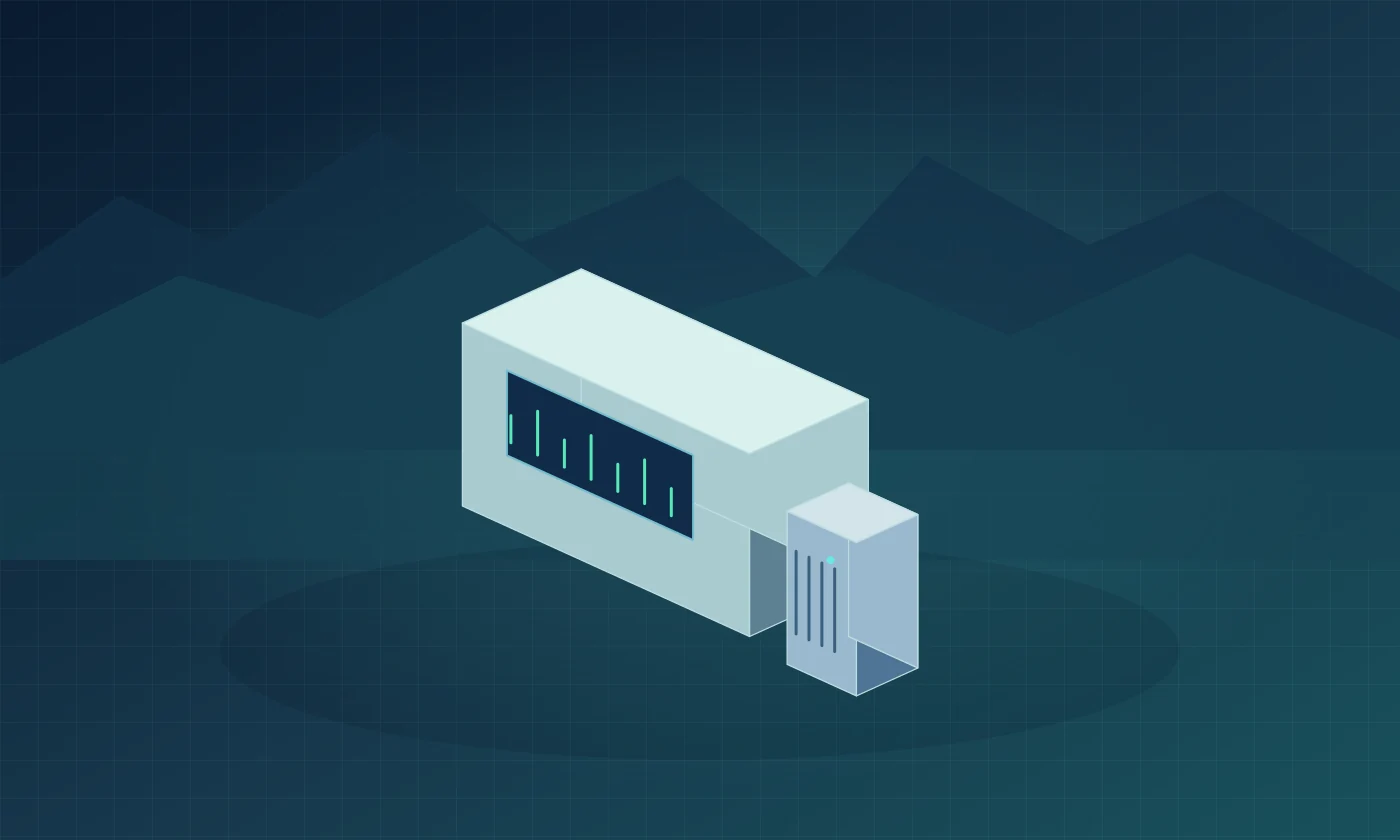
Five parts. One coordinated system.
Panels, inverters and batteries are only parts of the system. Samvora engineers how they work together, from the solar array to the switchgear, and supports the system through its lifecycle.
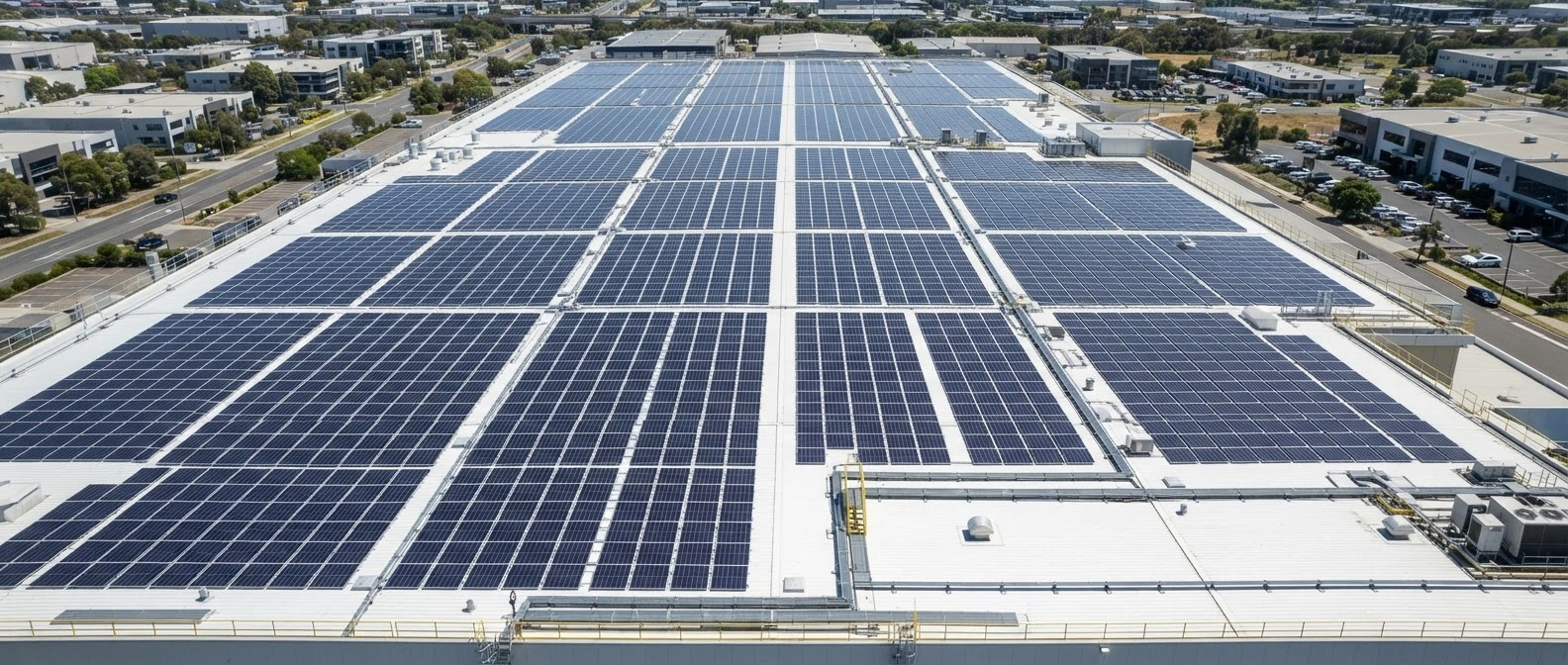
Rooftop and ground arrays sized to your daytime load.
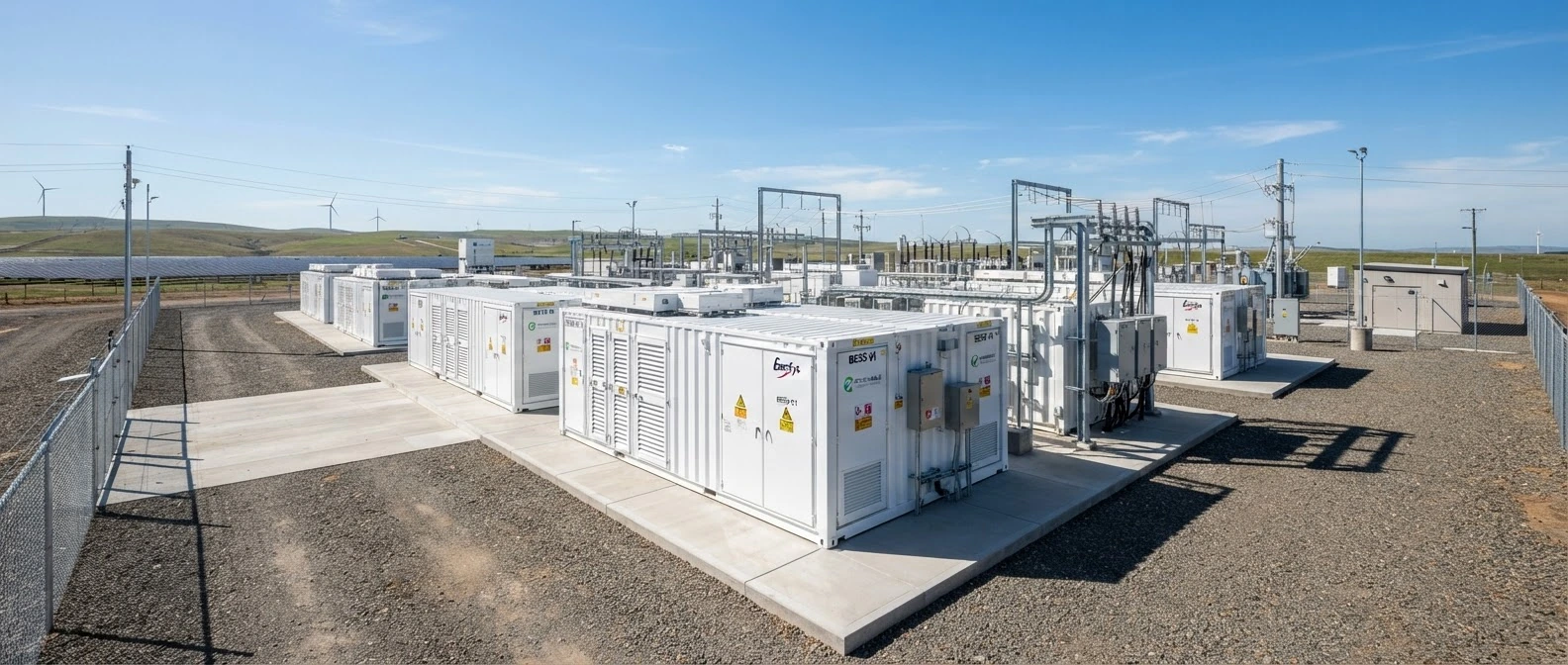
Commercial and industrial battery storage.
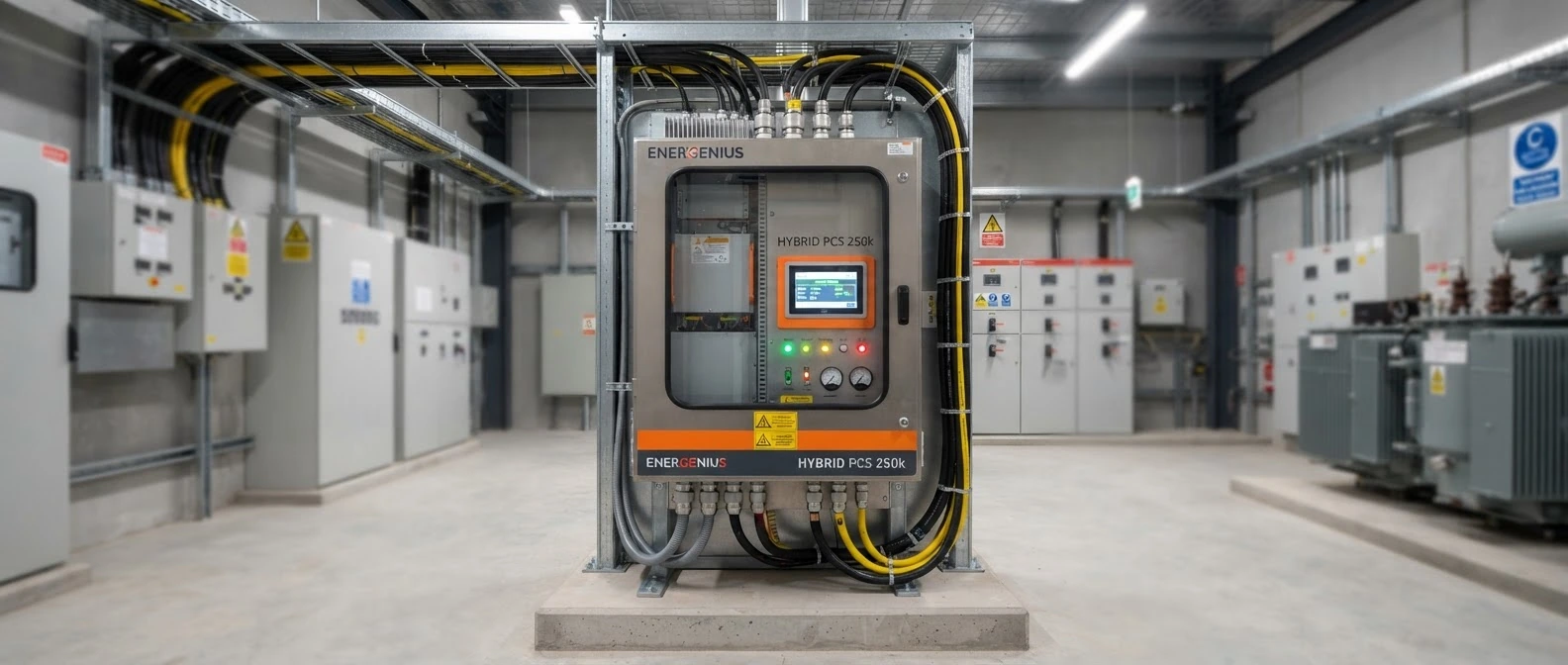
Bidirectional power, grid-forming where required.
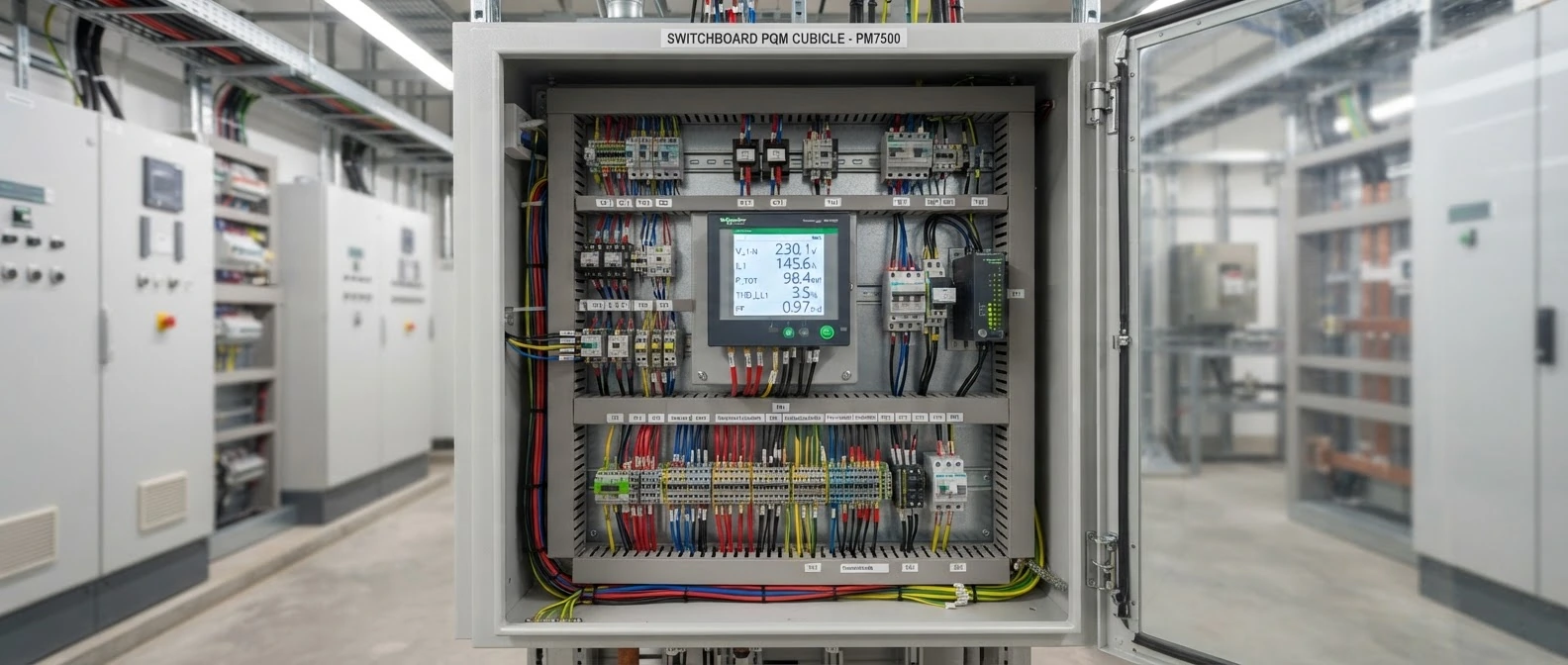
Measurement, control logic and safety limits.
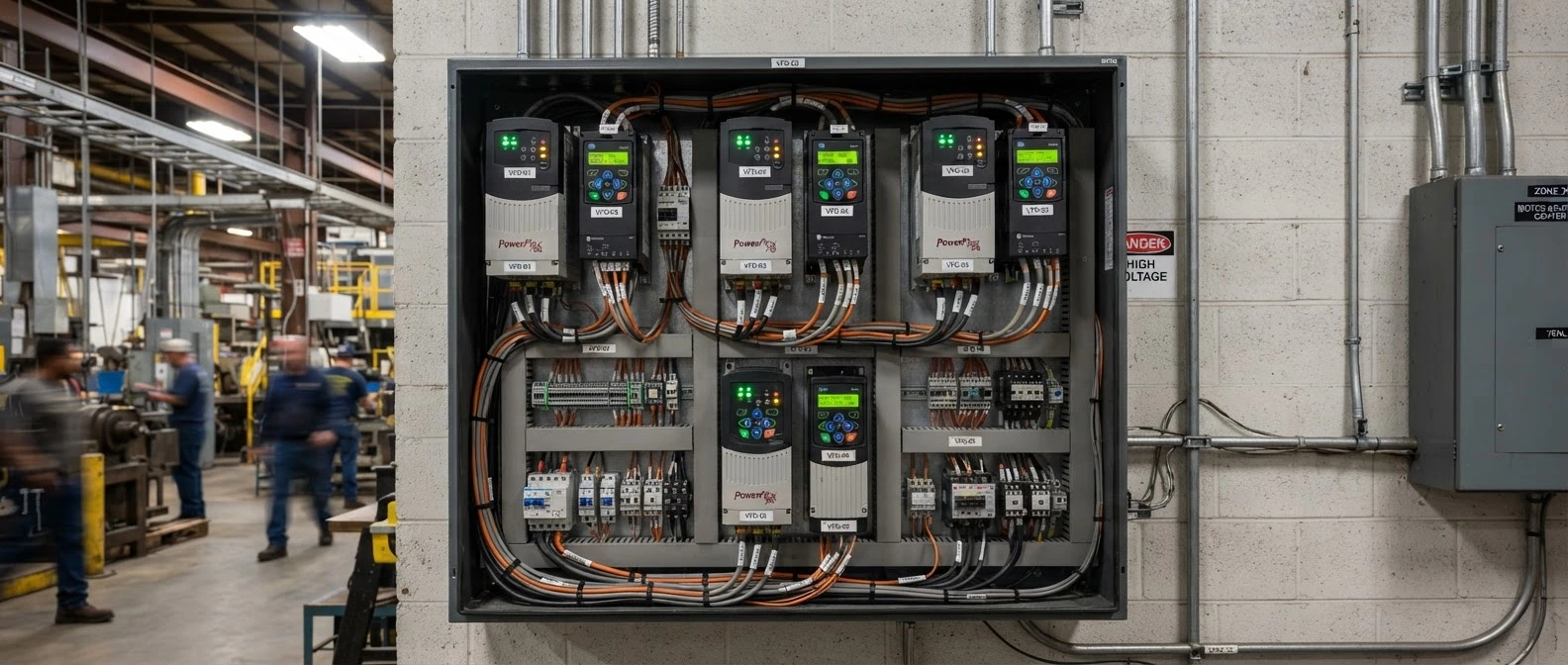
Soft starts, switchgear and earthing.
Equipment photographs are representative, not Samvora project photos.
Select any equipment. See how it works, where it connects and how it behaves.
Four coordinated views for each item: the working mechanism, its place in the single-line diagram, an engineering graph of its operating profile, and what it does, where it is limited, what protects it and what we verify on site.
- Solar PV and inverters Modules turn sunlight into DC; inverters track the maximum power point and convert it to grid-synchronised AC.
- BESS and battery racks Cells in modules, modules in racks, racks in parallel: the battery holds the energy the system shifts and reserves.
- Battery management system (BMS) Measures every cell, balances them and opens the contactors before a limit is crossed.
- Power conversion system (PCS) A bidirectional converter between battery DC and site AC: grid-following for cost shifting, grid-forming to run the site as an island.
- Energy management system (EMS) The decision layer: reads meters and devices, applies tariff and reserve rules, commands converters, inverters and the generator.
- Variable-frequency drive (VFD) Rectifier, DC bus and inverter synthesise a variable-frequency supply so a motor ramps up instead of surging.
- Motors, pumps, compressors, crushers and conveyors The machines that set a plant’s peaks: how they start and in what order decides what the energy system must supply.
- Diesel generator (DG) An engine-driven alternator, rated in kVA, that becomes the last-resort source once storage carries short outages.
- Transformers Steps utility HT down to LT. Its rating and impedance decide fault levels and where solar and storage can connect.
- LT panels, switchgear and protection Breakers, relays and busbars that connect every source and feeder and isolate only what is faulted.
- Cooling and fire safety Holds every rack inside its temperature window and detects trouble early, long before any fire.
Illustrative engineering views. Mechanisms, diagrams and graphs show behaviour only; ratings and performance come from the engineering model and the manufacturer’s data for each project.
How each part of the system actually works.
Thirteen interactive explainers, from the chemistry inside a cell to the network that carries every command. Step through each one’s operating states, then see what our engineers check before any equipment is specified.
Battery cell (LFP)
Lithium iron phosphate cells store energy by moving lithium ions between a graphite anode and an LFP cathode through the electrolyte, while electrons travel through the external circuit.
- Charging: The converter pushes electrons into the anode; lithium ions leave the cathode, cross the separator and lodge in the graphite.
- Discharging: Ions return to the cathode and electrons flow out through the load: stored chemical energy becomes electrical energy.
- Resting: No current flows. Cell voltage settles; the BMS watches temperature and self-discharge.
- What we check:
- Cell chemistry and datasheet operating window
- Cycle life at the planned depth of discharge and temperature
- Cell-to-cell consistency from the manufacturer
BESS racks and DC system
Cells are connected in series into modules and modules into racks, so the rack voltage suits the PCS. Racks connect in parallel through a DC combiner. The battery’s energy (kWh) is set here; the power it can deliver (kW) is set by the PCS and the cell limits together.
- Cells → modules → racks: Series strings set the voltage; parallel racks add energy. Every rack has its own contactors, fuses and pre-charge.
- Charging: The PCS pushes current into the DC bus; each rack accepts it only within the limits its BMS reports.
- Discharging: Racks share the load current; the weakest rack and the hottest cell set the allowed discharge.
- Rack isolated: A rack with a fault opens its contactors; the rest of the system can continue at reduced capability.
- What we check:
- Rack voltage window against the PCS DC input range
- Parallel-rack current sharing and circulating currents
- Short-circuit rating of the DC combiner and fuses
Battery management system (BMS)
A three-level BMS measures every cell, balances them and opens the rack contactors before any limit is exceeded. It reports state of charge and limits to the PCS and EMS.
- Measure: Module boards (BMU) read every cell voltage and several temperatures, many times a second.
- Balance: Cells that drift high are bled down so the whole string uses its full window.
- Protect: On over-voltage, over-temperature or insulation fault the rack controller (BCU) opens the contactors.
- Report: The system controller (BAU) sends state of charge and allowed charge/discharge power to the PCS and EMS.
- What we check:
- BMS architecture and protection thresholds
- Contactor, fuse and pre-charge design
- Communication protocol to PCS and EMS
Power conversion system (PCS)
A bidirectional converter between the battery’s DC and the site’s AC. IGBT bridges switch thousands of times a second; a filter turns the pulses into a clean sine wave.
- Inverting: Battery DC is switched into pulses and filtered into AC to supply the site.
- Rectifying: The same bridge runs in reverse to charge the battery from AC.
- Grid-following: A phase-locked loop tracks the grid voltage and the PCS injects or absorbs a set current. It needs a grid (or a grid-forming source) to follow, so it stops when the grid fails.
- Grid-forming: With the grid gone, the PCS generates its own voltage and frequency reference: the site becomes an island.
- Current limit: If a load or fault asks for more than the converter can give, current is clamped to protect the IGBTs.
- What we check:
- Continuous and short-term overload rating
- Grid-forming capability and islanding certification by the manufacturer
- Efficiency curve, cooling and ambient derating
Energy management system (EMS)
The EMS is the decision layer. It reads measurements, applies the operating mode and tariff rules, and sends setpoints to converters, inverters and the generator.
- Read: Grid import at the incomer, solar output, battery state of charge and limits, tariff window, demand target.
- Decide: Charge, hold or discharge; how much grid to allow; whether loads can wait; whether the reserve is at risk.
- Command: Power setpoints to the PCS, curtailment to PV inverters, start/stop to the DG, schedules to flexible loads.
- Verify: Measures the result and corrects within seconds; logs every decision so operation can be explained.
- What we check:
- Metering points and CT placement
- Supported protocols for every controlled device
- Fail-safe behaviour on communication loss
Solar inverter and MPPT
A solar array delivers most power at one voltage on its power–voltage curve. The inverter’s maximum power point tracker keeps finding that point as sunlight and temperature change, then synchronises its AC output to the grid.
- Strong sun: A tall power curve: the tracker settles at the knee where power is highest.
- Morning: Lower irradiance flattens the curve; the operating point moves.
- Passing cloud: Output changes within seconds; the tracker follows the new peak.
- Grid failure: A grid-following inverter must disconnect (anti-islanding) unless a grid-forming PCS provides the reference.
- What we check:
- String voltage within the MPPT window at all temperatures
- Anti-islanding and ride-through settings
- Communication for EMS curtailment
Variable-frequency drive (VFD)
A VFD controls a motor’s speed by changing the frequency and voltage it receives. Starting from near zero frequency, the motor accelerates without the surge of a direct-on-line start.
- Rectifier: Mains AC passes through a diode (or active) rectifier onto a DC bus.
- DC bus: Capacitors store and smooth the DC, riding through brief disturbances.
- Inverter: IGBTs synthesise a new AC waveform at the frequency the motor needs.
- Ramp: Frequency rises along a set ramp; current stays close to running current while the motor accelerates.
- What we check:
- Harmonic limits at the point of supply
- Motor insulation and cable length
- Starting torque for high-inertia loads
Motors and process machinery
An induction motor turns because the stator’s rotating field drags the rotor round. Started direct-on-line, it draws a surge several times its running current until it reaches speed. Nameplate horsepower is mechanical output; the electrical input is higher by the motor’s losses.
- Direct-on-line start: Full voltage at standstill: a heavy current surge, a torque jolt on couplings and a voltage dip on a weak supply.
- Drive-controlled start: A VFD raises frequency gradually; current stays close to running current. This limits the surge; it is not by itself an energy saving.
- Running: At speed the motor draws what the process demands: pumps and fans vary with speed, crushers and conveyors with material load.
- Process sequence: Downstream first: stockpile conveyor, screen, transfer conveyor, then the crusher, then the feeder. Stopping runs in reverse.
- What we check:
- Motor nameplate, starting method and load inertia
- Starting torque the process needs (loaded jaw, full conveyor)
- Interlocks for the start and stop sequence
Diesel generator (DG) set
A diesel engine turns an alternator. The governor holds speed (frequency) and the AVR holds voltage. A DG is rated in kVA; the real power it can deliver depends on the load power factor, and it burns fuel least efficiently at light load.
- Standby: Engine warm, controller watching the bus. Nothing is generated.
- Start & sync: On a start request the engine cranks, reaches speed and voltage, then either closes onto a dead bus or synchronises with a live one.
- Loaded efficiently: With the EMS deciding when it runs, the DG carries the site and recharges the battery at a healthy loading.
- Light load: Running a large DG for a small load wastes fuel and causes wet stacking: the EMS avoids it.
- What we check:
- kVA rating, power factor and step-load capability
- Governor and AVR response with converter loads
- Synchronising, reverse-power and interlock arrangement
Transformer
A transformer moves energy between two windings through a shared magnetic core, stepping utility HT voltage down to the LT voltage a site uses. Its rating and impedance decide fault levels and where storage and solar can connect.
- Energised: Alternating current in the primary winding creates alternating flux in the core.
- Loaded: The flux induces voltage in the secondary; current flows to the site in proportion to the turns ratio.
- Losses & cooling: Core and copper losses become heat, carried away by oil or air through the radiator fins.
- Reverse flow: With solar export or battery discharge, power can flow from LT to HT: protection and metering must allow it.
- What we check:
- kVA rating and present loading
- Vector group and impedance
- Reverse-power and export permissions
Protection and selectivity
Protection detects abnormal current and isolates only the faulted part of the system. Converter-based sources supply limited fault current, so settings are coordinated for both grid and island operation.
- Normal: Current transformers report feeder current to the relays; all breakers closed.
- Fault: A short circuit on one feeder makes current rise sharply.
- Trip: The nearest relay picks up and its breaker opens within its set time.
- Selectivity: Upstream breakers wait longer, so the rest of the site stays supplied.
- What we check:
- Fault levels from grid, DG and converters
- Relay settings for grid-connected and island modes
- Earthing system and arc-flash review
Communication network
Measurements and commands travel on several networks: field buses inside equipment, a plant network to the controller, and an encrypted link for remote monitoring. Each has its own timing and failure behaviour.
- Field bus: BMS on CAN, meters and DG controller on RS-485 Modbus RTU: fast, local, deterministic.
- Plant network: PCS and inverters on Modbus TCP or IEC 61850 over Ethernet to the EMS gateway.
- Remote: An encrypted link sends data to monitoring; local control never depends on it.
- Link lost: If a device stops answering, the EMS falls back to a defined safe mode.
- What we check:
- Protocol support per device and firmware
- Network segregation and cyber-security
- Fallback modes on communication loss
Cooling and fire safety
Battery enclosures are cooled to keep cells in their temperature window, and watched by layered detection. Most protection acts long before any fire: by sensing off-gas early and isolating the battery.
- Thermal management: HVAC or liquid cooling keeps every rack within its temperature window; airflow is designed rack by rack.
- Early warning: Off-gas and temperature sensors detect a cell going out of bounds before smoke appears.
- Isolate: The BMS opens contactors, the PCS stops and ventilation clears gases; alarms reach the site team.
- Suppress: If conditions escalate, the suppression system discharges and the fire plan takes over.
- What we check:
- Enclosure fire-safety approach and local authority requirements
- Detection layers: off-gas, smoke, heat
- Spacing, ventilation and emergency access
Solar PV
Steady daylight generation sized to match on-site load, not simply to fill the roof.
- Rooftop, carport, canopy and ground-mount arrays
- Yield, shading and degradation analysis
- String design matched to inverter and PCS choice
Rooftop generation · LT distribution · shift and daytime loads
Battery Energy Storage (BESS)
Energy reserves defined by capacity (kWh), power (kW), state of charge, depth-of-discharge limits, C-rate and thermal behaviour.
- Commercial and industrial storage, not small consumer packs
- Thermal and safety design for the enclosure
- Cycle-life aware operation through EMS modes
PCS / Hybrid inverters
DC-coupled hybrid or AC-coupled PCS, chosen by site scale, battery capacity, motor starting loads and utility interaction rules.
- Bidirectional AC/DC conversion
- Grid-following and grid-forming operation
- Islanding and resynchronisation where specified
- Compare coupling options →
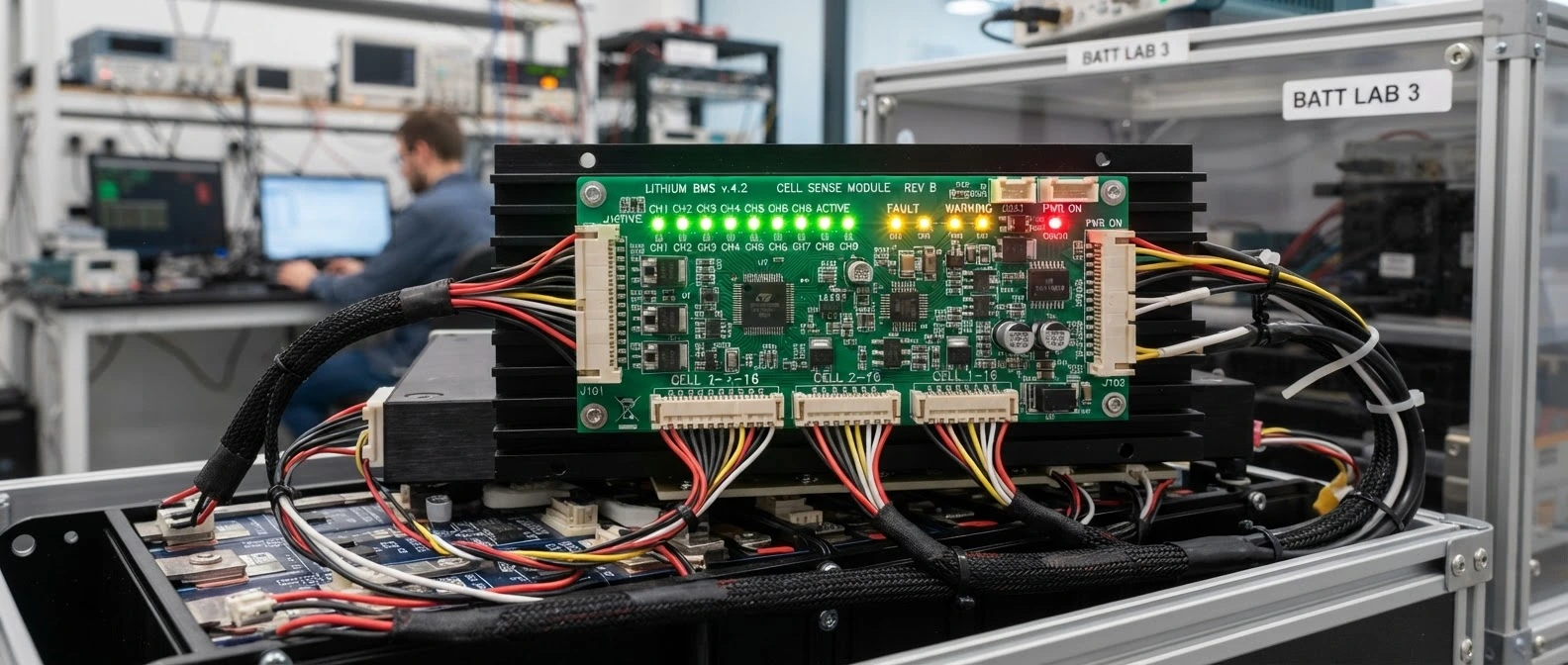
Battery Management System (BMS)
Monitors and protects at cell level: voltage, temperature, current, SOC and fault signals, with authority to open safety contactors independently.
- Cell- and module-level protection
- Reports to the EMS over documented interfaces
- The EMS can never override BMS safety limits
Energy Management System (EMS)
Coordinates load, solar output, battery state and tariff schedule on a continuous feedback loop: sense, bound, decide, execute, verify.
01Solar generates
PV supplies daytime energy, designed around the site’s load profile, available space and generation evidence.
02BESS stores, PCS converts
Available surplus can charge storage through the PCS, within converter and battery limits. Discharge supports the selected load and operating objective.
03The grid becomes a managed resource
Import follows the site’s permissions and constraints. During an interruption, a suitable grid-forming PCS may supply an isolated bus after an islanding and protection review.
04The EMS decides
It reads solar, state of charge, tariff window, demand, grid status and equipment limits, then coordinates the assets. The BMS keeps cell-level safety authority.
05Samvora operates the system
We design the control strategy, commission it on site and monitor it through its lifecycle, subject to the project’s agreed scope.
From source readings to operating decisions.
These are the roles of a coordinated system. Your site’s plant and electrical connection are shown together in the Energy Solution Experience.
EMS reads
EMS coordinates
Conceptual roles, not a live control interface or an approved design.
Battery Life · Balanced · Performance · Emergency Backup
Gentle cycling, narrow SOC window.
TOD savings with a resilience reserve.
Lowest grid import, harder cycling.
Deep reserve held for outages.
Illustrative state-of-charge curves; the dashed line is the protected reserve. More on the EMS →
Telemetry & metering
Power and energy measured at the utility incomer, transformer, solar bus and major process feeders, so decisions rest on real numbers.
- Revenue and check metering
- CT/PT selection and accuracy class
- Interval data for design and verification
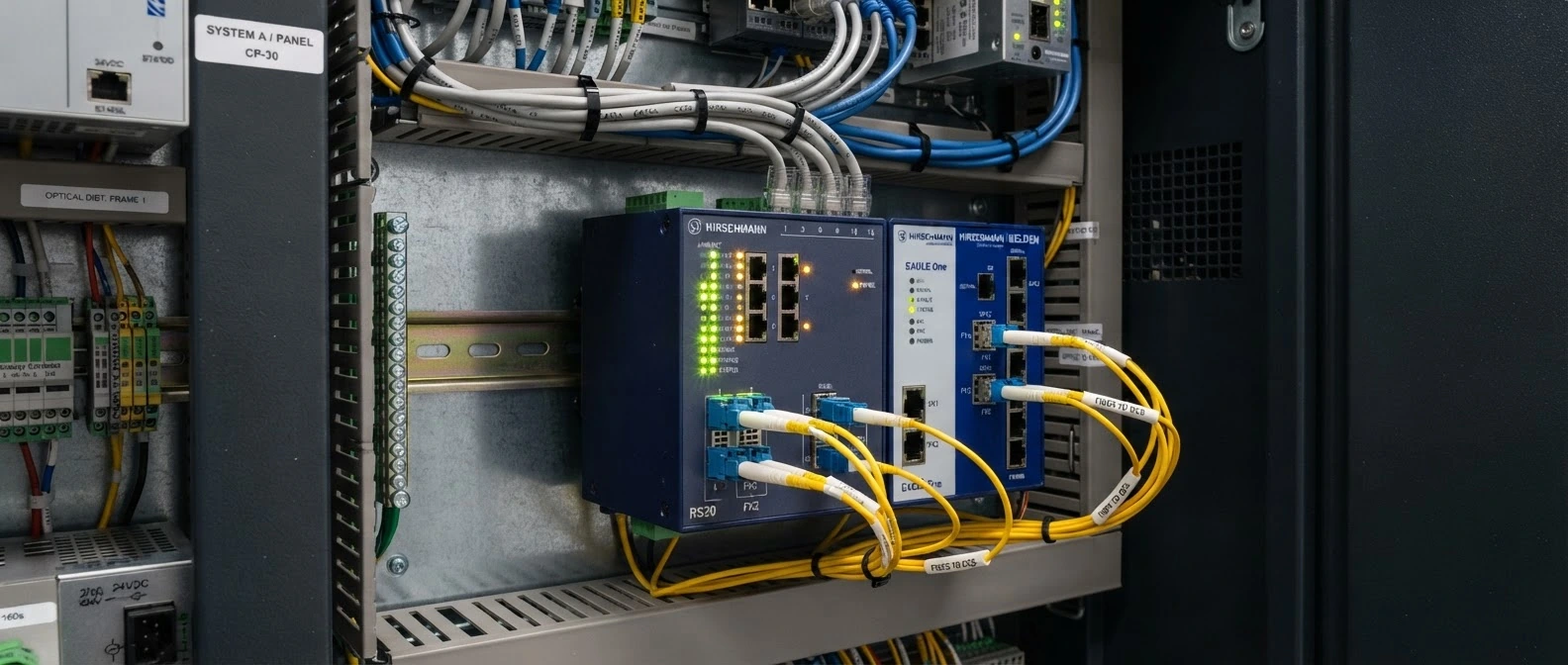
System communications
Equipment talks over CAN, RS485, Modbus RTU/TCP, Ethernet and OEM interfaces where documented and supported.
- Gateway and network design
- Register mapping per model
- Interface support depends on selected equipment and documentation
VFD & motor control
Variable frequency drives give controlled motor speed and soft starts, keeping inrush inside PCS and grid limits.
- Soft starting and speed control
- Start sequencing through PLC/EMS
- Harmonics reviewed at the LT panel
- Process & heavy motor systems →
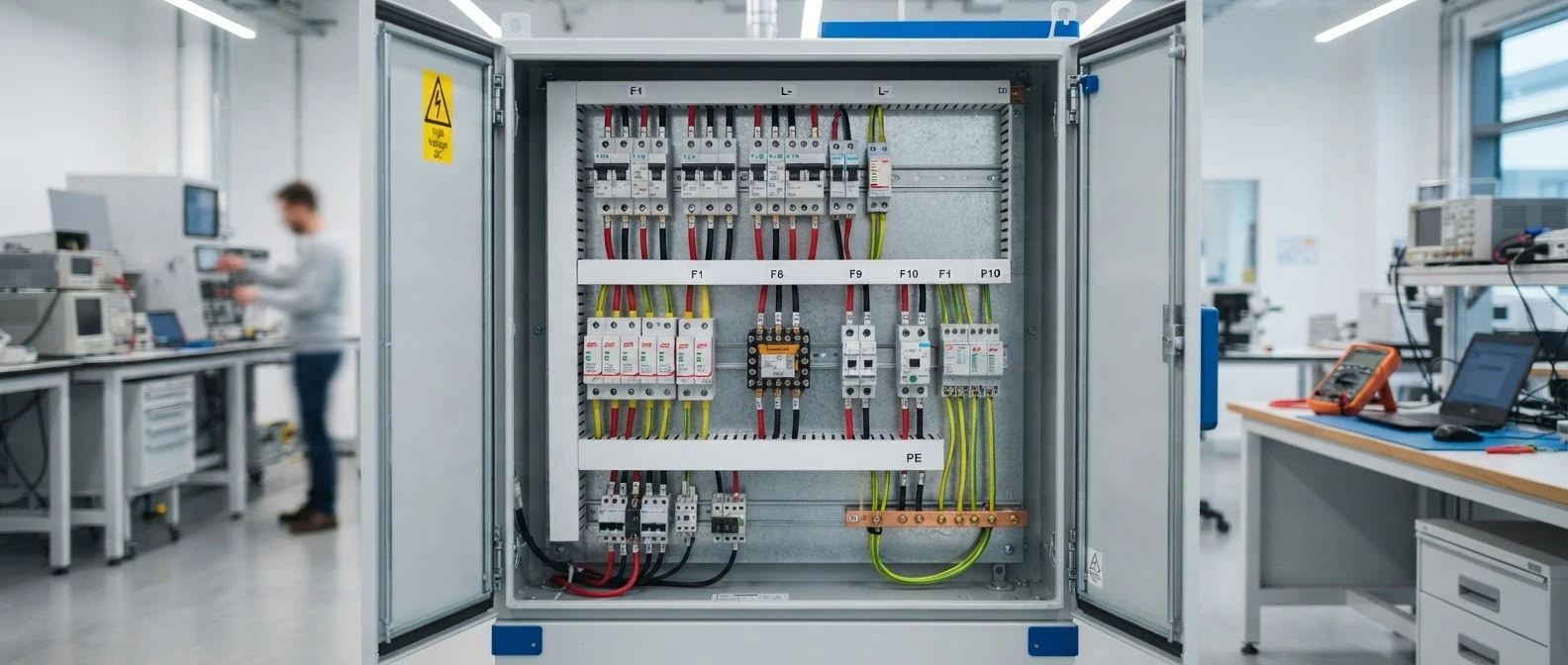
Electrical protection
DC and AC isolation, surge protection, earthing layouts and properly rated cabling, coordinated with project-specific settings.
- Protection coordination and trip settings
- SPD, isolation and earthing design
- Tested before energisation
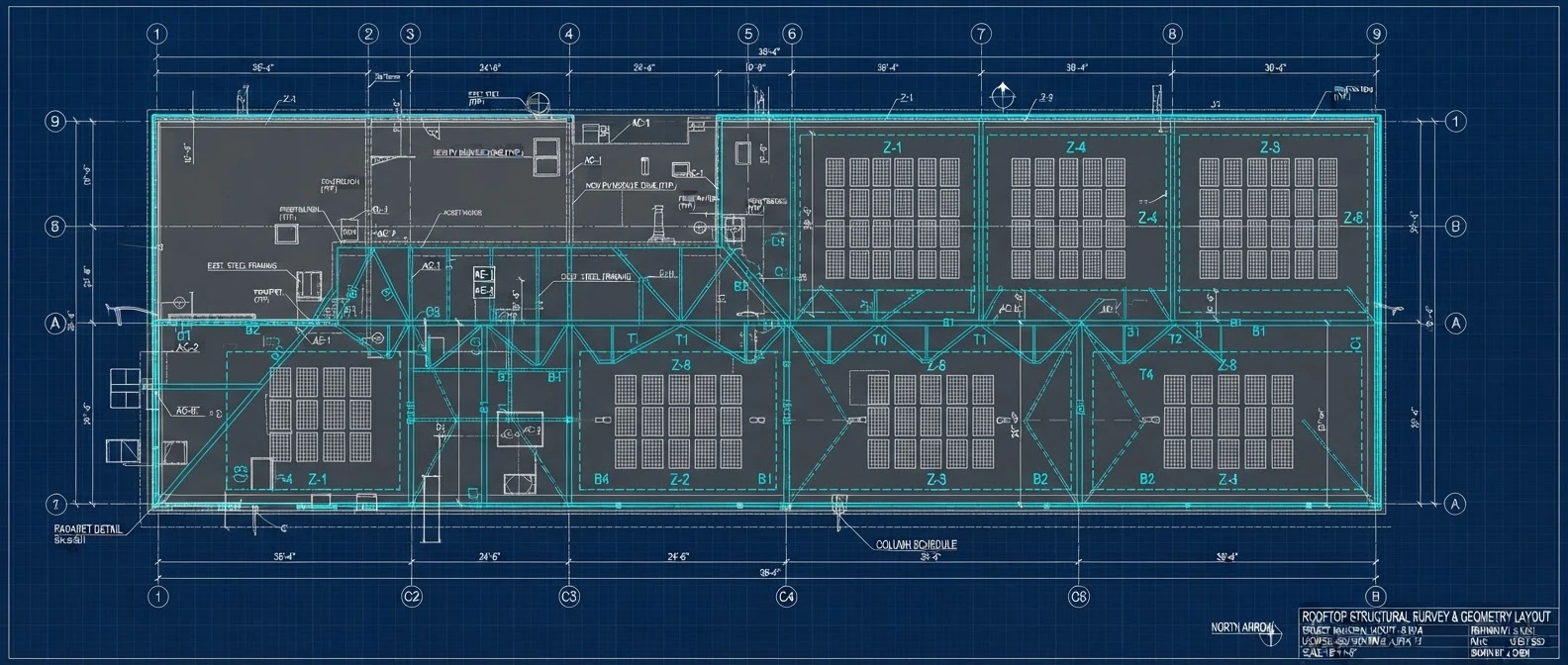
Structural engineering
Roof geometry, survey data, module layouts and wind-load checks produce a clear structure design and bill of materials.
- Survey-based layout and clearances
- Structure loading review against applicable codes
- Fabrication-ready definitions
Digital Twin and Samvora AI
Links survey, bills and live telemetry, so strategies can be tested before hardware changes. Digital Twin →
Helps parse tariffs, spot missing data and summarise logs. No action runs without engineer review. Samvora AI →
Equipment images are representative, not Samvora project photographs. Illustrative system descriptions are not live data.
Integration capability, not a supplier catalogue.
We evaluate BESS, PCS, EMS, VFD, inverter and electrical equipment from global and Indian manufacturers, model by model, for your site, duty cycle and control needs.
Start with how your site actually uses energy.
Share a few details and your recent bills. A Samvora engineer reviews your load, tariff and reliability needs before anything is proposed.