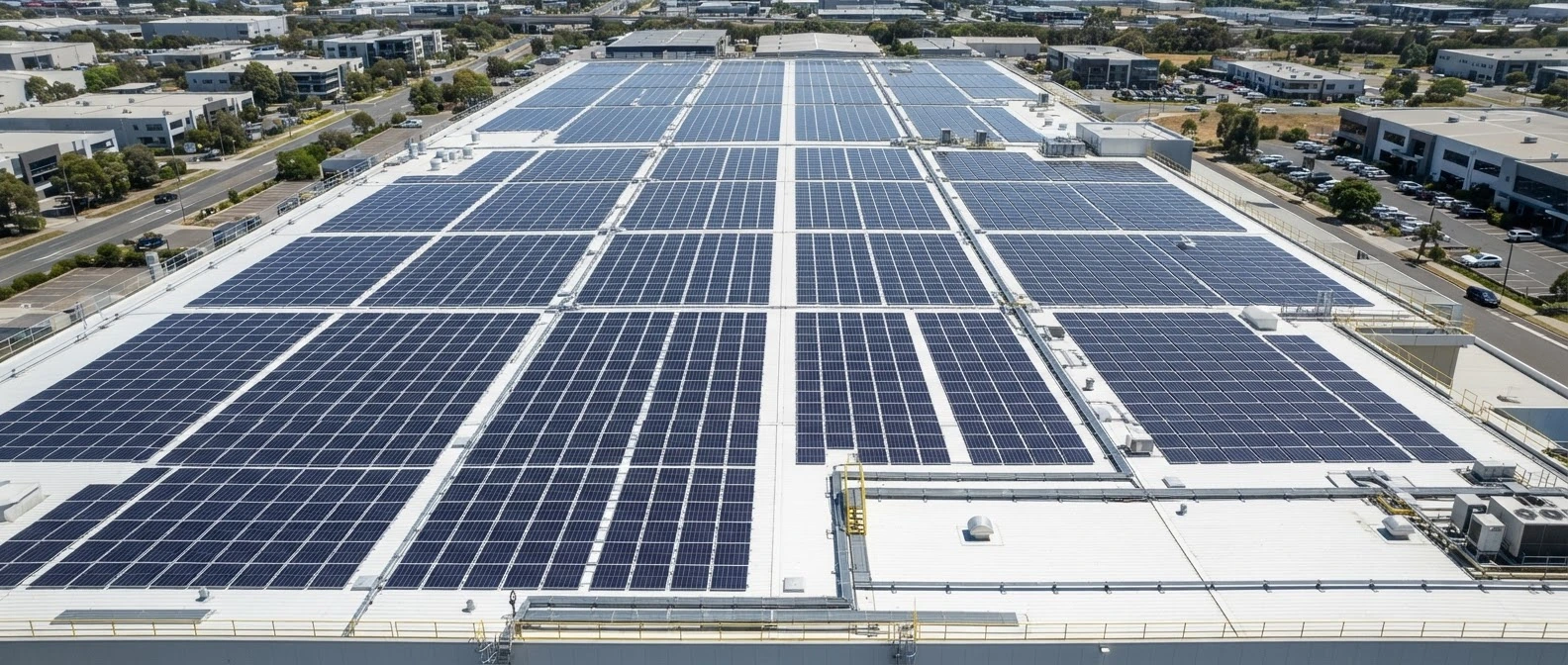
Home/Industries/Industrial / Manufacturing
Factories · industrial sheds · agro processing · warehousesDesign around production, demand and real operating hours.
Manufacturing runs on shifts, motors and demand charges. Samvora maps real load behaviour so solar and storage match production, not an average.
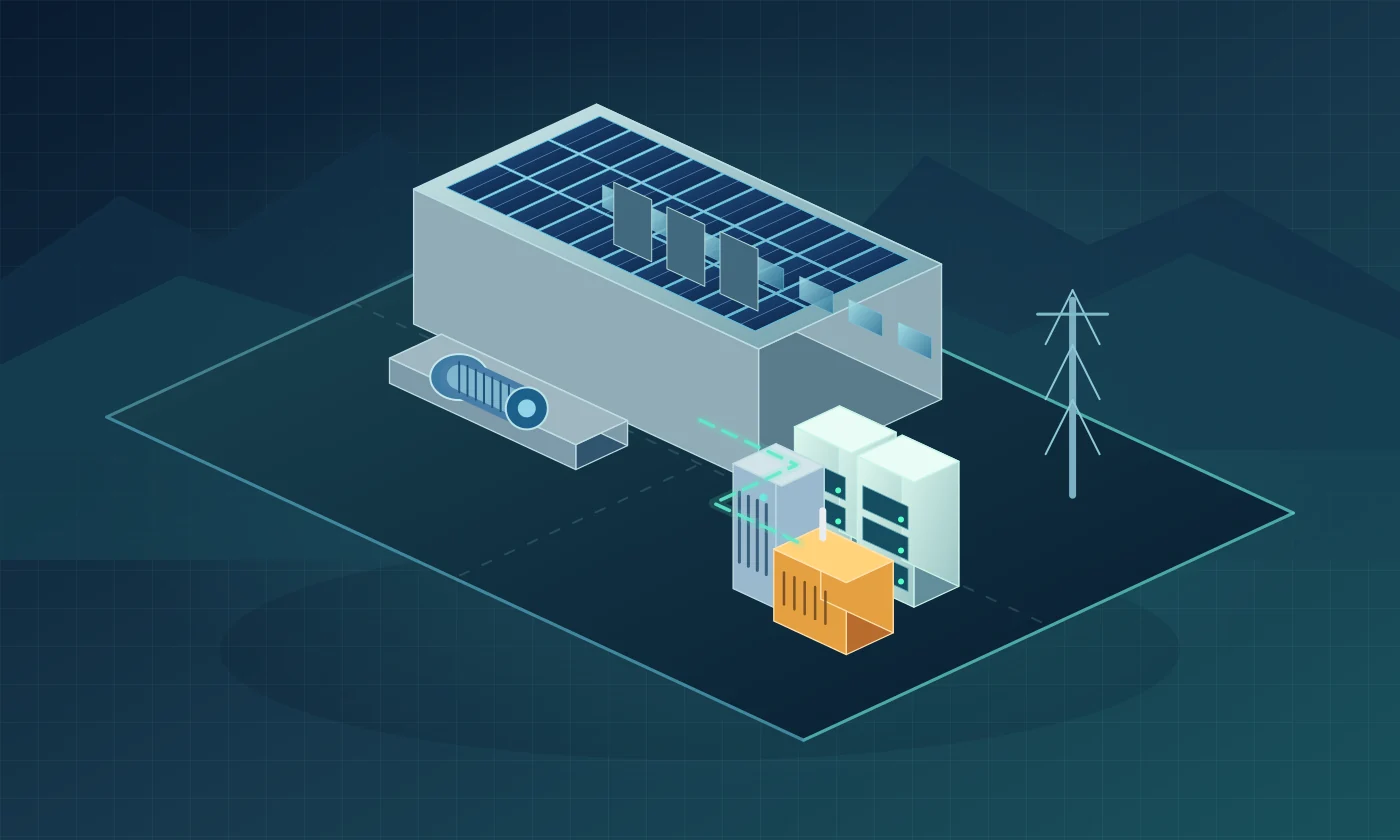
A production hall, its utilities and the energy yard that serves them.
Compressors, cooling towers and process lines each behave differently. Switch to motor start, peak hours or an interruption and watch which machines keep running and which sources carry them.
New industrial plant → Solar + BESS + PCS + EMS
Where it hurts today
- A second shift runs straight into the evening peak-tariff window.
- Demand charges are set by short simultaneous starts of compressors and lines.
- Supply is mostly reliable, but an interruption stops production and the DG takes time to start.
What changes
- Solar supplies the day; surplus charges the battery.
- The EMS caps grid demand and discharges through the peak window.
- On a grid failure the grid-forming PCS carries critical loads; the DG is last resort.
Impact, classed honestly
- Solar yield and self-consumption · Calculable
- Demand-limit compliance · Calculable
- Lifecycle cost of energy · Estimate until measured
- Transformer and protection capacity · Needs site verification
Interactive comparison loads with JavaScript. Qualitative behaviour only: no ratings, savings or backup times are shown.
One engineering state. Drag the comparison or step through the four stages. The plant view, the single-line diagram and the graphs below follow the same configuration rules as the Energy Explorer. Motion and wording show behaviour only; no ratings, sizes or savings are implied.
01How it operates
- Solar on the hall roof carries shift load during daylight.
- Compressors, cooling and process lines start in sequence through soft starters or VFDs.
- The battery trims demand spikes and covers the second shift’s peak-tariff hours.
- The EMS respects production state through PLC signals.
02When it makes sense
- Two-shift or continuous operation running into the evening peak.
- Contract-demand penalties from simultaneous starts.
- Large shed roofs with sound structure.
- Voltage-sensitive lines that trip on dips.
03Engineering constraints
- Production schedules change: the EMS must follow, not dictate.
- Compressed-air and cooling loads need sub-metering before shifting.
- HT metering and transformer loading decide the connection point.
- Process interlocks are never overridden by energy control.
Shift-driven load, peak-window storage.
The second shift runs into the evening peak; storage covers it and trims demand spikes. Shapes are typical; your plant is measured first.
Supply always equals demand: solar first, then the battery in the windows the EMS chooses, then the grid. Charging appears below the axis. Shape from the illustrative model; real balance comes from metered data and the engineering model.
Grid energy drawn in each tariff window and the highest demand of the day, before and after storage. Bars are relative to the no-storage case; actual tariffs and savings depend on the utility category and are calculated only from your bills.
A plant is a process, not just a roof.
Large sheds, process lines, compressors and utilities, each with its own priority.
Production loads with fixed schedules.
Large motors with high starting current.
Must never trip.
Can be pre-cooled in solar hours.
Large PV potential.
Day-heavy, shift-driven, motor-intensive.
Ramp to full production as solar rises.
Production continues into the evening peak.
Base load, or a third shift.
Factory · two shifts: Production follows the shift pattern; the second shift runs into the evening peak.
Demand, tariffs and motor starts.
Simultaneous starts set the monthly demand.
Evening production lands in peak windows.
Sensitive equipment trips on sags.
Solar for the shift, storage for the peaks.
PV sized to process load. A BESS trims demand spikes and covers peak windows; the EMS works alongside plant controls.
Status labels are honest: Core service is delivered today; Engineering capability is designed and delivered project by project; Study / roadmap is under evaluation.
- 01Industrial solar EPC Core service
Shed-roof and ground arrays with structural review.
- 02Demand limiting with BESS Engineering capability
Battery holds import under the contract limit.
- 03EMS + PLC coordination Engineering capability
Energy decisions respect production state.
- 04Motor-start review Engineering capability
VFD and sequencing where starts drive demand.
Solar carries the shift; storage holds the limit.
In the illustration, midday solar covers the process load and charges storage; the battery then limits grid import through the evening shift.
Illustrative model, not project data. Topology, storage role and limits are set per site after assessment.
Each row is one piece of equipment; colour shows what it is doing. The EMS row shows the decision behind each change.
For a plant we start with…
- 12 months of bills + TOD split
- Contract demand
- Shift pattern
- Motor list & starting methods
- Shed roof / land drawings
See how this would work at your factory.
Answer a few visual questions and see your site today and with Samvora: at midday, in the evening peak and in a power cut. No sign-up; nothing is sent until you choose.
Start with how your site actually uses energy.
Share a few details and your recent bills. A Samvora engineer reviews your load, tariff and reliability needs before anything is proposed.