Home/Industries/Process / Heavy Motor Loads
Pumping · agro processing · cold chain · stone crushersUnderstand the motor and process before sizing the energy system.
Pumps, conveyors, crushers and compressors cannot be sized from a bill alone. Samvora maps starting currents, duty cycles and process sequence, then designs solar, storage and drives around them.
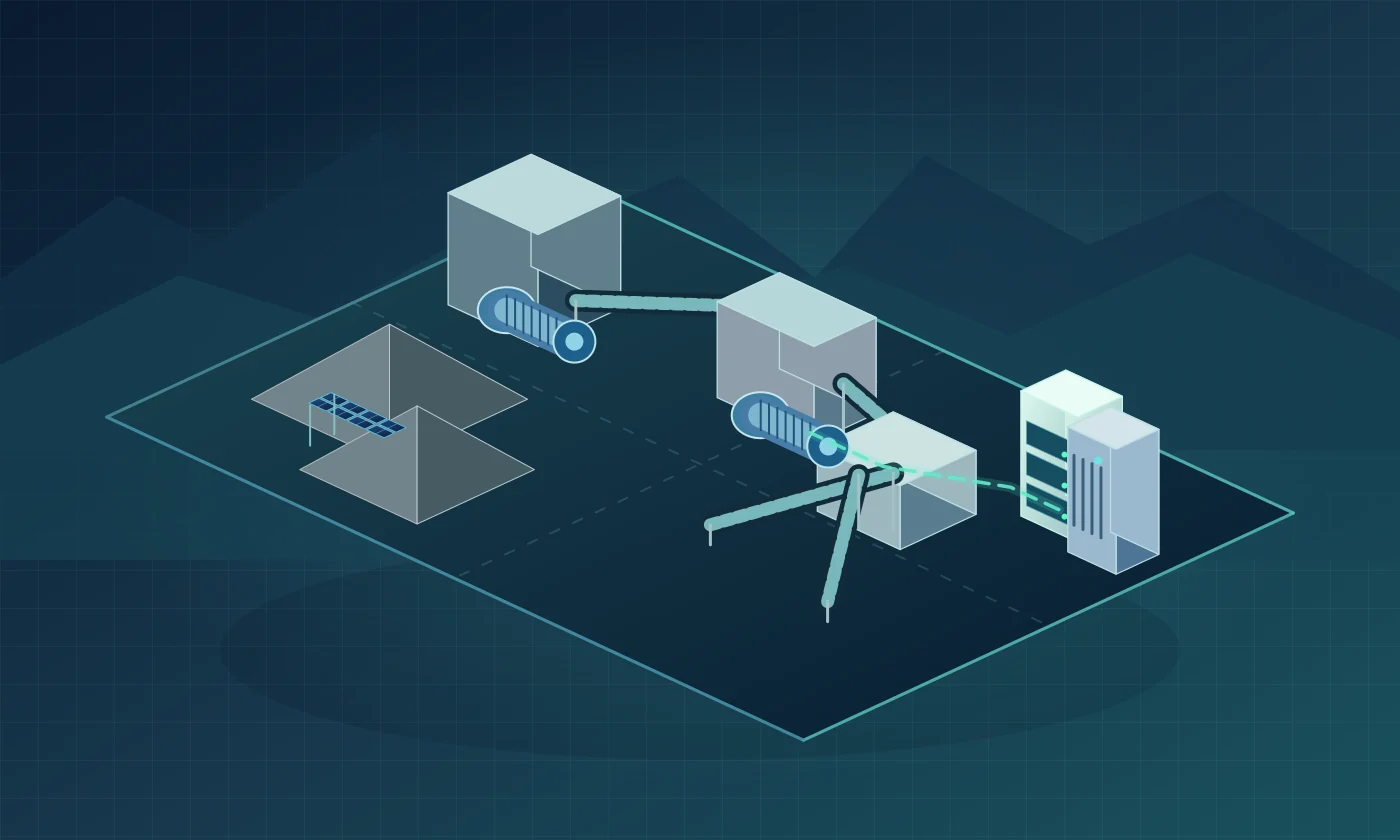
Feed, crush, convey, screen, return: and the power behind every start.
Follow stone from the hopper through the jaw, screen and cone crusher return loop. Select a step to highlight the machine; switch to motor start or a grid interruption to see how drives and storage respond.
VFD-heavy plant / stone crusher → drives + BESS + grid-forming PCS + EMS
Where it hurts today
- Jaw, cone and conveyor motors start direct-on-line, each drawing a surge several times its running current.
- Starts on a weak rural feeder dip the voltage and can trip other drives or the incomer.
- Frequent cuts stop the circuit mid-load; restarting a loaded jaw is the hardest start of all.
What changes
- Drives ramp frequency so starting current stays close to running current.
- The EMS sequences starts so only one large motor accelerates at a time.
- The battery supports each start, keeping grid import under the demand limit; islanded starts are allowed only within PCS limits.
Impact, classed honestly
- Starting-current reduction · Calculable
- PCS overload margin for islanded starts · Calculable
- Energy saving from drives · Estimate until measured
- Process and mechanical constraints · Needs site verification
Interactive comparison loads with JavaScript. Qualitative behaviour only: no ratings, savings or backup times are shown.
One engineering state. Drag the comparison or step through the four stages. The plant view, the single-line diagram and the graphs below follow the same configuration rules as the Energy Explorer. Motion and wording show behaviour only; no ratings, sizes or savings are implied.
01How it operates
- Raw stone feeds the primary jaw; conveyors carry it to the screen.
- Oversize returns through the cone crusher in a closed loop.
- Drives start in sequence from the discharge end, so no conveyor runs into a stalled one.
- VFDs or soft starters limit inrush; the battery supports large starts and short interruptions.
02When it makes sense
- Weak rural feeders and frequent interruptions.
- DG used as the main supply or on most days.
- Daytime-only operation with open land for solar.
- Starting surges that trip the supply or set demand.
03Engineering constraints
- Jaw and cone crushers have high inertia: starting torque must be verified.
- Dust, vibration and heat drive enclosure and cooling choices.
- PCS overload capability is checked against the largest start.
- This site type is presented as an engineering study, not a completed project.
Heavy starts and a day-only load.
Crushers and conveyors set the peak at start-up, not during steady running. Starting method decides how large that peak is.
Each row is one piece of equipment; colour shows what it is doing. The EMS row shows the decision behind each change.
Today every interruption starts the generator, often lightly loaded, where fuel use per unit of energy is worst. With storage, short interruptions ride on the battery and the generator starts only when an outage outlasts the reserve, then runs well loaded while recharging the battery. Fuel figures are estimated only from your generator log.
The machines that set the plant’s peaks.
Working mechanism, where it connects in the single-line diagram, its operating profile, and what limits and protects it. All equipment
Motors, pumps, compressors, crushers and conveyors
The machines that set a plant’s peaks: how they start and in what order decides what the energy system must supply.
Motor horsepower ≠ electrical input power. Nameplate horsepower is mechanical output. Electrical input is higher by the motor’s losses and depends on how loaded it is, so input power is measured, not read off the nameplate.
- Loaded starts need high torque
- Process interlocks fix the start order
- Pumps and fans vary with speed; crushers and belts vary with material
Motor groups define the load.
Across pumping stations, agro processing, cold chains and crushers.
Pumps, crushers and compressors.
PLC logic that protects the process.
Staged in sequence.
Decide how motors start.
Space for PV.
Heavy starts, steady running, strict sequence.
Several times running current for each large motor.
Material-dependent fluctuations around a baseline.
Sequence reversed; no material left on belts.
Stone crusher · day operation: Sharp morning start-up as motors come online in sequence; near-zero at night.
Starting transients drive the design.
Inrush sets PCS, grid and demand limits.
Rural sites often face weak feeders.
Expensive for daytime process loads.
Drives, sequence and energy system designed together.
VFDs soften starts, the PLC/EMS sequences motor groups, and PV, BESS and PCS are sized against the measured process, not the nameplate total.
Status labels are honest: Core service is delivered today; Engineering capability is designed and delivered project by project; Study / roadmap is under evaluation.
- 01Motor & process study Core service
Nameplates, duty cycles and sequence.
- 02VFD coordination Engineering capability
Soft starts and speed control.
- 03PCS / BESS sizing against inrush Engineering capability
Overload capability matched to measured starts.
- 04Grid-minimised operation Study / roadmap
PV + BESS + PCS + EMS for weak-grid sites.
One example: a stone-crusher motor sequence.
Truck → primary crusher → transfer conveyor → secondary crushers → vibrating screen → product conveyors. Drives start downstream-first so material never lands on a stopped belt.
Full-speed starts, heavy inrush, mechanical stress and demand penalties.
Soft ramps keep start-up inside PCS and grid limits.
This is an engineering study, not an installed-project claim. No measured savings or performance are published.
A direct-on-line start draws a surge of several times running current until the motor is up to speed; star-delta lowers it with a second step at changeover; a soft starter limits it by ramping voltage; a VFD ramps frequency so current stays close to running current. Shapes are typical, not a measurement of any motor.
Solar and storage behind a controlled process.
In the illustration the battery supports process load while the EMS holds grid import inside a limit.
Illustrative model, not project data. Topology, storage role and limits are set per site after assessment.
Emergency Backup: Holds a deep reserve for critical loads. The battery discharges only when the grid fails. Useful ahead of known outages or monsoon storms. The battery stays inside its operating window; charge and discharge never exceed the converter limit.
For a process site we start with…
- Motor list & nameplates
- Starting methods
- Process sequence
- Shift pattern
- Bills & feeder details
See how this would work at your plant.
Answer a few visual questions and see your site today and with Samvora: at midday, in the evening peak and in a power cut. No sign-up; nothing is sent until you choose.
Start with how your site actually uses energy.
Share a few details and your recent bills. A Samvora engineer reviews your load, tariff and reliability needs before anything is proposed.