Home/Industries/Healthcare
Hospitals · clinics · diagnosticsEnergy design begins with what must stay on.
Continuity in healthcare means separating life-critical loads from everything else, then protecting them with the right reserve. Samvora designs solar and storage around a critical-load study agreed with your team.
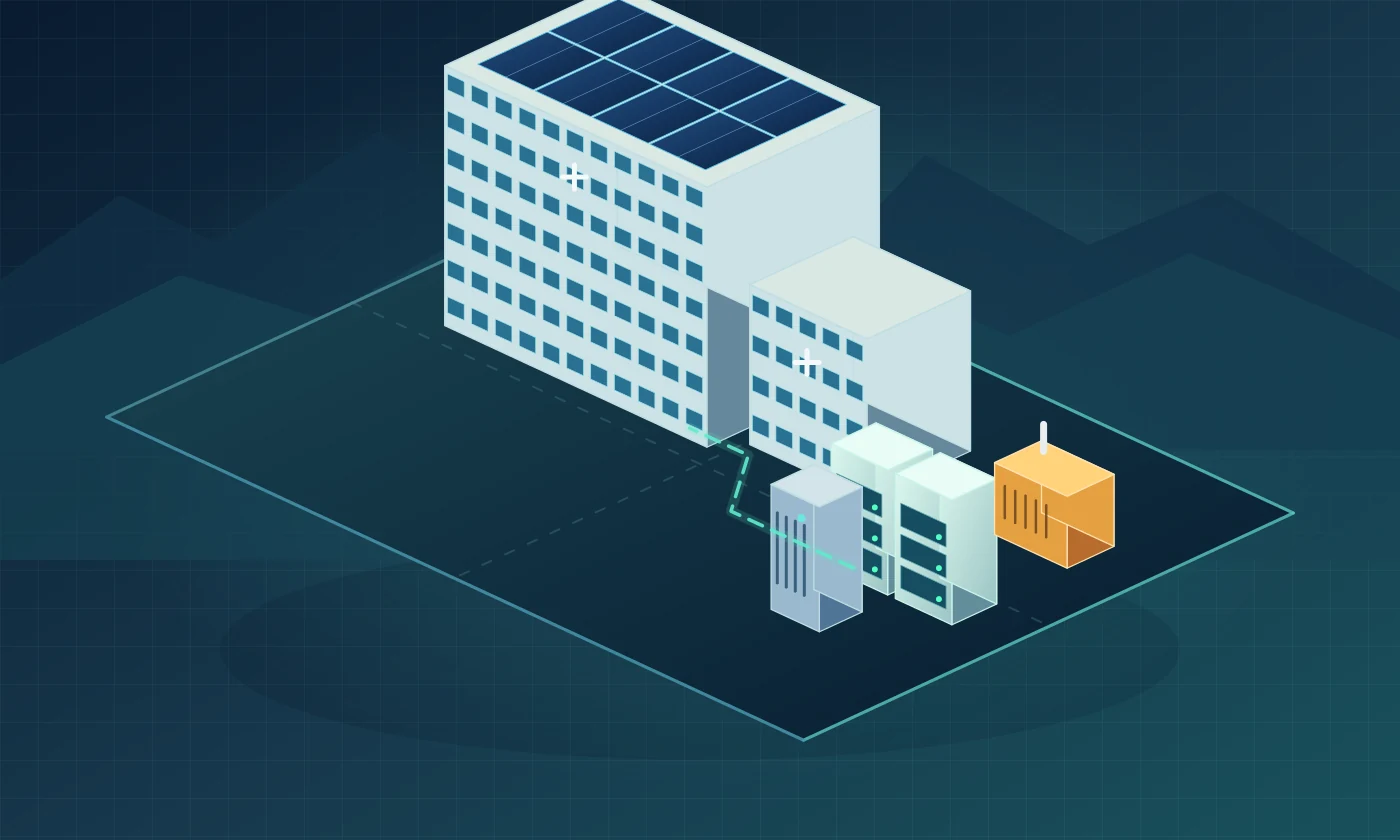
Wards and theatres stay on. Everything else waits its turn.
Step through an interruption: the grid-forming PCS keeps the critical bus energised, OPD and HVAC can pause, and the DG starts only if the outage outlasts the battery reserve.
Hospital → critical-load continuity with grid-forming storage
Where it hurts today
- ICU, OT, oxygen plant and lifts cannot wait for a generator to start and change over.
- Medical equipment has its own UPS units, but the building around it goes dark at every cut.
- Daytime HVAC load is high and continuous; the bill has no daytime offset.
What changes
- Grid fails → the essential bus stays supplied by the grid-forming PCS.
- Non-essential feeders are paused to protect the reserve.
- The DG starts only for a long outage and recharges the battery while it runs.
Impact, classed honestly
- Essential-bus ride-through time · Calculable
- Generator run time · Calculable
- Daytime bill offset · Estimate until measured
- Transfer behaviour for medical areas · Needs site verification
Interactive comparison loads with JavaScript. Qualitative behaviour only: no ratings, savings or backup times are shown.
One engineering state. Drag the comparison or step through the four stages. The plant view, the single-line diagram and the graphs below follow the same configuration rules as the Energy Explorer. Motion and wording show behaviour only; no ratings, sizes or savings are implied.
01How it operates
- Wards, OT, ICU and medical equipment sit on the critical bus.
- On an interruption the grid-forming PCS carries the critical bus without a restart.
- HVAC and non-clinical areas can be paused to protect the reserve.
- The DG starts only if the outage outlasts the battery reserve.
02When it makes sense
- Frequent interruptions and sensitive medical equipment.
- Existing UPS and DG changeover that causes brief blackouts.
- Rooftops suitable for solar over a continuous load.
- Expansion plans that need more backup capacity.
03Engineering constraints
- Medical electrical installations follow their own standards and approvals.
- Critical and non-critical circuits must be clearly separated.
- Oxygen plants, MRI and lifts each need start and harmonic review.
- Battery location must respect hospital fire and evacuation planning.
Critical load first, through every interruption.
A high, continuous base load with daytime peaks. During an outage the critical share is always supplied; the EMS decides what waits.
When the grid fails, critical feeders stay on the grid-forming PCS while the EMS pauses non-critical feeders if the reserve needs protecting. When the grid returns, non-critical loads come back and the battery recharges.
Each row is one piece of equipment; colour shows what it is doing. The EMS row shows the decision behind each change.
A hospital has priorities, not just loads.
Critical areas are identified with the customer and the responsible engineering team before any design.
Life-critical supply and lighting.
Sensitive, high-value equipment.
Clean-area air handling.
Can be shed during an outage.
Existing backup to be coordinated.
Near-constant demand, day and night.
Wards, ICU and HVAC keep a high base load.
OPD, imaging and theatres add daytime peaks.
Load stays high after solar is gone.
Hospital · continuous: A high base that never stops, with daytime HVAC and outpatient load on top.
Reliability first, then cost.
Switchover gaps and DG start delays affect care.
Fuel cost, maintenance and emissions.
A large bill with little flexibility.
A protected critical bus, backed by storage.
Solar lowers daytime cost. A BESS behind a grid-forming PCS holds a reserve for critical loads, with defined shed paths for other loads and interlocks to existing UPS and DG sets.
Status labels are honest: Core service is delivered today; Engineering capability is designed and delivered project by project; Study / roadmap is under evaluation.
- 01Critical-load study Core service
Priority, flexible and sheddable loads mapped with your team.
- 02Solar EPC Core service
Rooftop and parking-canopy PV.
- 03Reserve-SOC battery strategy Engineering capability
EMS holds charge specifically for critical supply.
- 04Grid-forming PCS backup Engineering capability
Seamless island operation for the critical bus.
- 05DG / UPS coordination Engineering capability
Generator becomes the last resort, not the first.
When the grid fails, critical loads keep running.
The illustration runs an evening outage: the PCS forms the grid, the battery carries critical areas and the EMS sheds other loads to protect the reserve.
Illustrative model, not project data. Topology, storage role and limits are set per site after assessment.
Emergency Backup: Holds a deep reserve for critical loads. The battery discharges only when the grid fails. Useful ahead of known outages or monsoon storms. The battery stays inside its operating window; charge and discharge never exceed the converter limit.
For a hospital we start with…
- Critical-load list (with your engineers)
- UPS & DG ratings and run hours
- Outage history
- 12 months of bills
- Single-line diagram
See how this would work at your hospital.
Answer a few visual questions and see your site today and with Samvora: at midday, in the evening peak and in a power cut. No sign-up; nothing is sent until you choose.
Start with how your site actually uses energy.
Share a few details and your recent bills. A Samvora engineer reviews your load, tariff and reliability needs before anything is proposed.