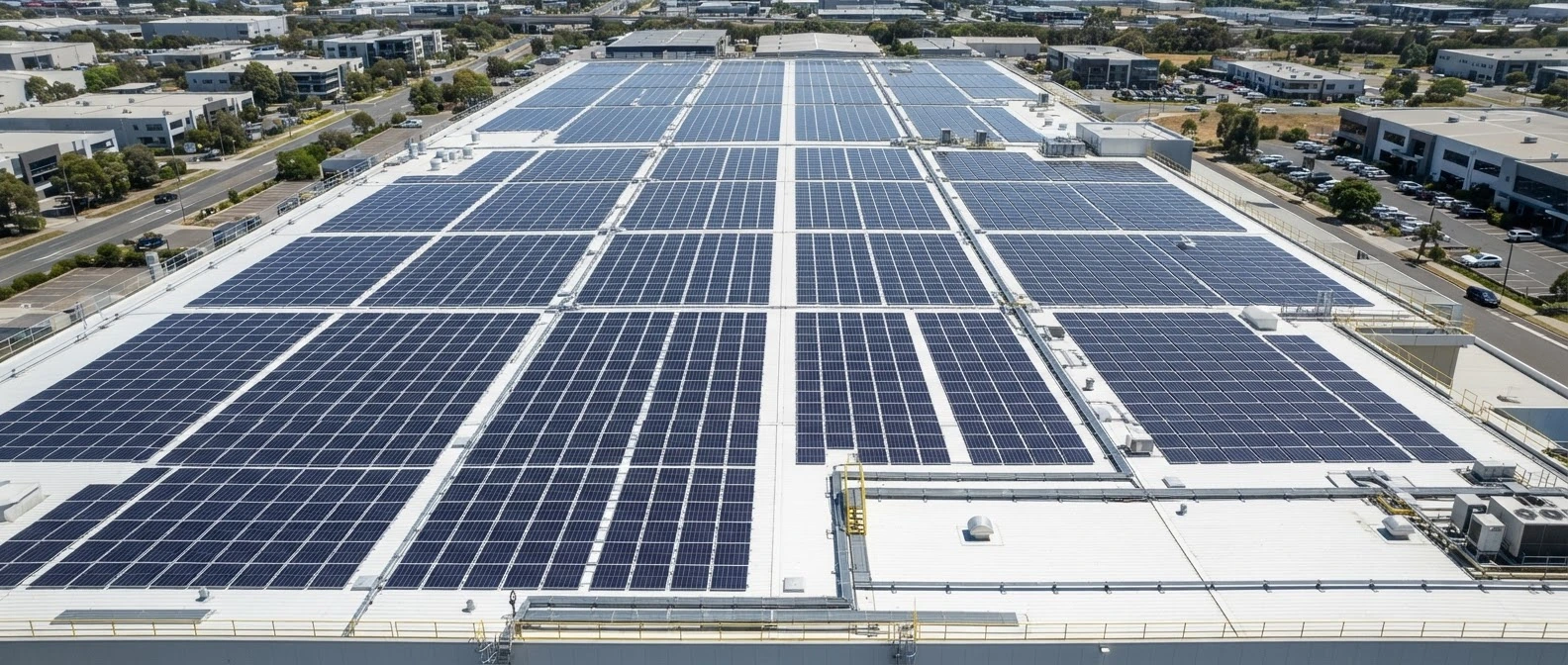
Move the sun into your evening.
Solar generates when energy is plentiful. Storage lets you use it when grid energy is expensive. With a PCS and an EMS in control, the battery charges, discharges and holds reserve on purpose.
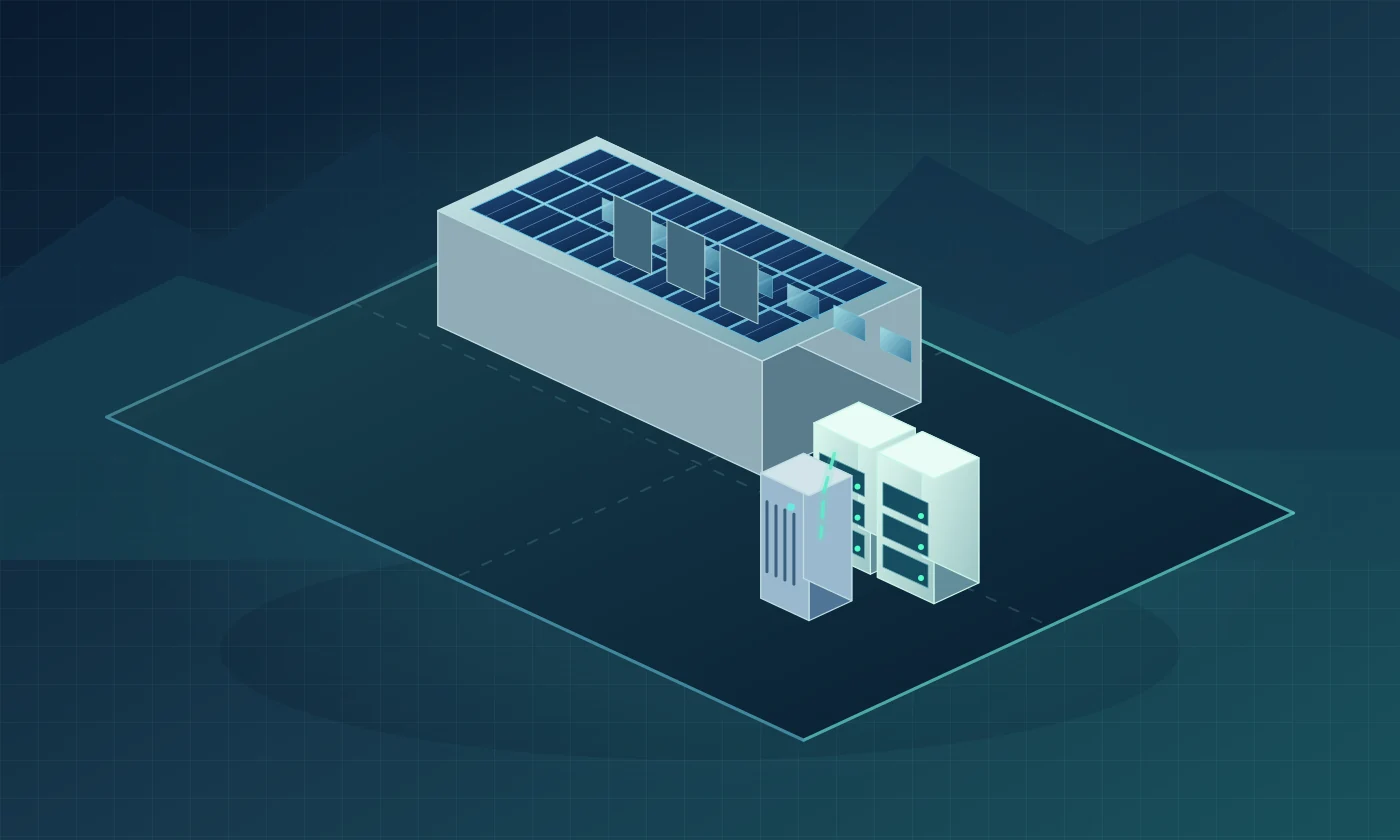
Solar for the working day. Storage for the evening.
Midday surplus charges the battery; the EMS spends it through the evening peak. Switch scenarios and compare the site with and without the battery.
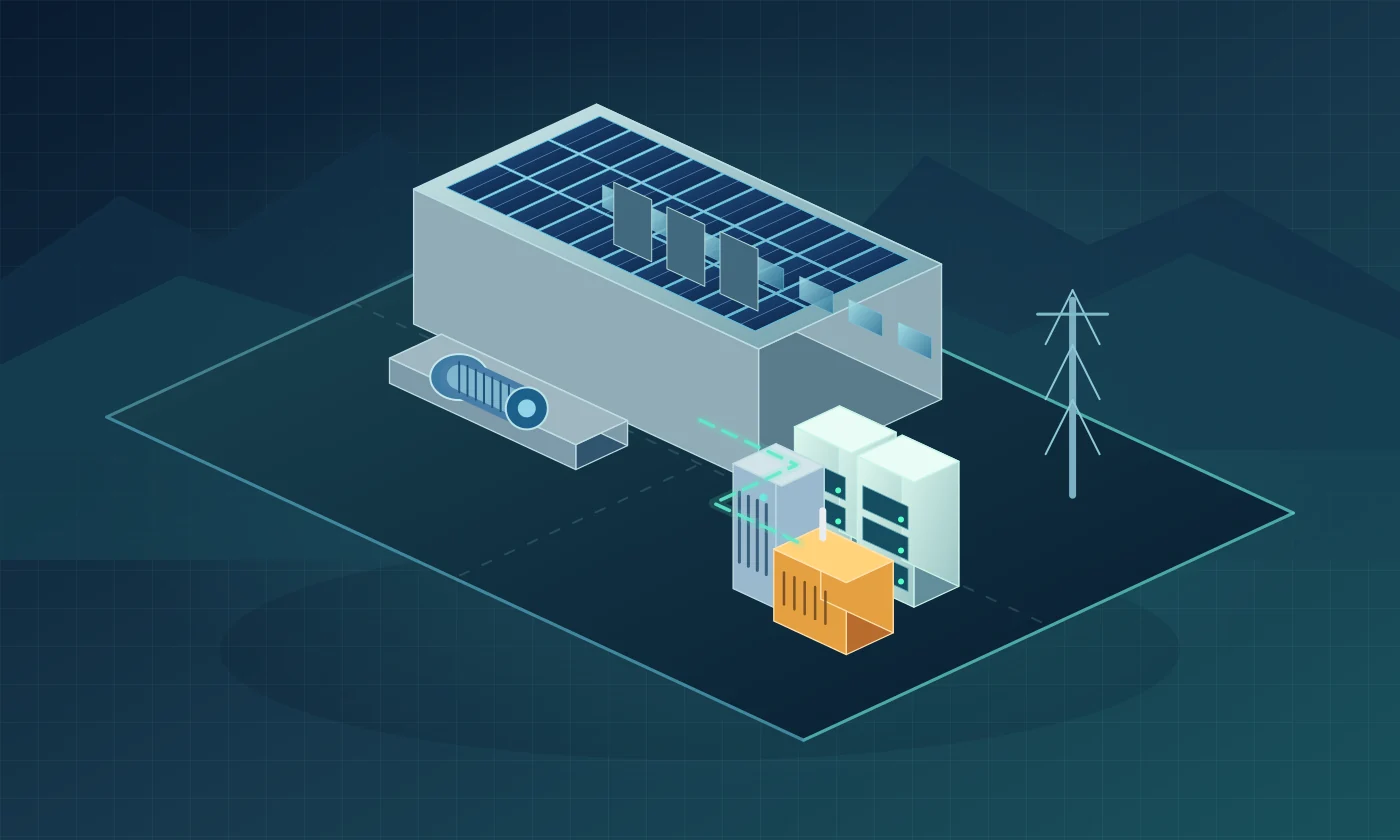
New industrial plant → Solar + BESS + PCS + EMS
Where it hurts today
- A second shift runs straight into the evening peak-tariff window.
- Demand charges are set by short simultaneous starts of compressors and lines.
- Supply is mostly reliable, but an interruption stops production and the DG takes time to start.
What changes
- Solar supplies the day; surplus charges the battery.
- The EMS caps grid demand and discharges through the peak window.
- On a grid failure the grid-forming PCS carries critical loads; the DG is last resort.
Impact, classed honestly
- Solar yield and self-consumption · Calculable
- Demand-limit compliance · Calculable
- Lifecycle cost of energy · Estimate until measured
- Transformer and protection capacity · Needs site verification
Interactive comparison loads with JavaScript. Qualitative behaviour only: no ratings, savings or backup times are shown.
One engineering state. Drag the comparison or step through the four stages. The plant view, the single-line diagram and the graphs below follow the same configuration rules as the Energy Explorer. Motion and wording show behaviour only; no ratings, sizes or savings are implied.
01How it operates
- Solar supplies site loads first during daylight.
- Surplus solar charges the battery instead of being spilled or exported.
- Through the evening peak the EMS discharges the battery and limits grid import.
- Off-peak hours the battery rests or tops up its reserve, depending on the operating mode.
02When it makes sense
- Day generation larger than daytime use, with load continuing into the evening.
- TOD tariffs with an evening peak window.
- Export limits or net-metering caps that would otherwise waste solar.
- Sites that also want short-interruption backup.
03Engineering constraints
- Storage is sized on measured evening energy, not on panel capacity.
- AC- or DC-coupling changes efficiency, backup behaviour and expansion options.
- Battery cycle life depends on the operating window the EMS is allowed to use.
- Roof structure and shading set how much solar is realistic.
Where every hour’s energy comes from.
Supply always equals demand: solar first, then the battery in the windows the EMS chooses, then the grid. The before/after pair keeps load and sun identical; only the control changes.
Supply always equals demand: solar first, then the battery in the windows the EMS chooses, then the grid. Charging appears below the axis. Shape from the illustrative model; real balance comes from metered data and the engineering model.
Left: solar only, no storage. Right: solar with battery and EMS. Same load, same sun; only the control changes. Shapes only, no savings implied.
Four steps, every day.
Daytime HVAC · lighting · IT · tariff-aware storage
- 01Photovoltaic loop
Daylight arrays feed site load first through inverters.
- 02Surplus diversion
When production exceeds load, the EMS routes surplus into the BESS.
- 03Load buffering
In tariff peaks and after sunset, stored energy discharges to the site.
- 04Coordinated utility
The grid remains a managed standby, bounded by EMS limits and reserves.
Not just “solar panel = bill saving”.
A battery on its own is just a container. What saves money is the schedule: when to charge, when to discharge, what reserve to keep and how much grid to allow.
Balanced: Stores midday solar, covers peak windows and trims demand above the site limit. Our usual starting point. The battery stays inside its operating window; charge and discharge never exceed the converter limit.
Each row is one piece of equipment; colour shows what it is doing. The EMS row shows the decision behind each change.
Operational suitability.
We check these conditions against your data before recommending storage.
Manufacturing shifts, hotels and hospitals that keep running after sunset.
Where peak-window energy is significantly more expensive than the rest of the day.
Sites where continuity and transition behaviour need engineered backup.
When export rules mean surplus PV output is wasted or poorly credited.
Where brief sags or trips cause batch losses or equipment stress.
Storage is not universally required. Where it does not pay back, we say so.
DC-coupled hybrid or AC-coupled PCS?
Both provide energy control; neither is universally better. The choice depends on site scale, battery capacity, motor starting loads and grid interaction rules.
Solar + storage, answered.
Does a battery make sense for my business?
It depends on your tariff structure, evening and peak consumption, contract demand and outage pattern. Storage is justified when there is energy to shift or a cost or reliability problem to solve, and the assessment tells you honestly whether that is the case.
What is the difference between BESS, PCS and EMS?
The BESS stores energy. The PCS is the power electronics that charge and discharge it and can form a grid during outages. The EMS decides when and how much, based on solar, tariff, load, state of charge and limits. The BMS protects the cells and the EMS cannot override it.
Do you offer standard battery sizes?
Every system is sized to the site. We are developing standard commercial power blocks to speed up delivery, but the right power and energy rating comes out of your load analysis.
See how this would work at your site.
Answer a few visual questions and see your site today and with Samvora: at midday, in the evening peak and in a power cut. No sign-up; nothing is sent until you choose.
Start with how your site actually uses energy.
Share a few details and your recent bills. A Samvora engineer reviews your load, tariff and reliability needs before anything is proposed.